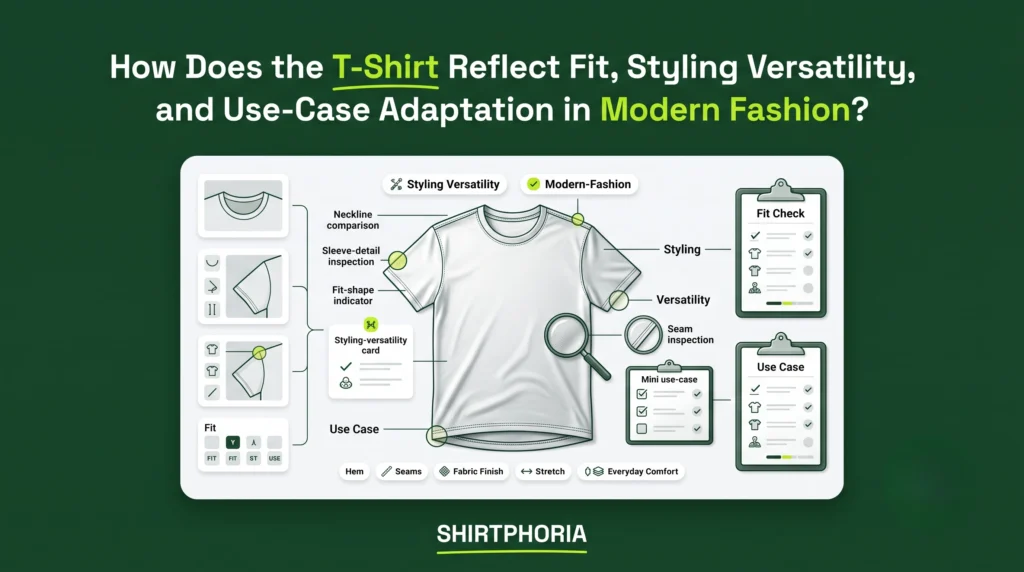
How Does the T-Shirt Reflect Fit, Styling Versatility, and Use-Case Adaptation in Modern Fashion?
In modern fashion, the T-shirt reflects adaptation through three connected pillars: fit interacting with body geometry, styling versatility shaping outfit context, and fabric construction determining comfort, structure, and use case.
Many people treat the T-shirt as an afterthought. That mistake can lead to poor proportions, weak fabric choices, stretched necklines, awkward blazer pairings, and styling mismatches. A T-shirt may look simple, but its success depends on shoulder placement, chest ease, sleeve shape, fabric weight, knit density, hem length, and the setting where it is worn.
This guide analyzes the modern T-shirt by breaking down fit geometry, styling frameworks, and fabric construction so readers can choose and style the garment with more precision. The modern T-shirt can support casual outfits, smart-casual looks, streetwear, layering systems, activewear, and premium wardrobe basics, but it should not be treated as a full replacement for formal shirting.
A clean, structured T-shirt can sometimes work in smart-casual or high-low styling. It can sit under a blazer, anchor a monochromatic outfit, or create relaxed streetwear volume. Still, true formalwear usually requires more structured shirting because collars, cuffs, plackets, and woven fabric play a different sartorial role.
The T-shirt is the foundational garment for understanding fit and fabric, setting the stage for the broader shirt types guide.
Disclaimer: This guide is for educational and informational purposes only. Shirt comfort, fit, fabric behavior, and styling suitability can vary by climate, activity, fabric construction, brand, body proportions, and personal sensitivity. Always check the specific shirt’s fabric label, care label, fit, and return policy before buying.
Why Is the T-Shirt a Major Example of Modern Fashion Adaptation?
The T-shirt is a major example of modern fashion adaptation because its simple structure allows fit, fabric, color, and styling context to change its visual role across casual, smart-casual, streetwear, and activewear outfits.
The modern T-shirt has fewer structural details than collared or tailored shirts. It usually has no stiff collar, formal cuff, full dress placket, or reinforced collar stand. Because of that simplicity, the garment’s identity is carried heavily by proportion, textile quality, neckline condition, color, and how it interacts with the rest of the outfit.
How the T-Shirt Works as a Style Blank Canvas
The T-shirt works as a style blank canvas because its lack of stiff collars, formal cuffs, complex plackets, and rigid tailoring lets fabric, fit, color, and drape carry most of the visual message.
A plain T-shirt can become casual, minimal, sporty, relaxed, streetwear-oriented, or smart-casual depending on the material, cut, and outfit context. A lightweight jersey T-shirt can work as an undershirt or summer layer. A heavyweight cotton T-shirt can stand alone with trousers. A slim fit T-shirt can sit cleanly under a blazer. A boxy T-shirt can create a modern relaxed silhouette.
Simple construction allows broad styling adaptation. The T-shirt does not rely only on cut and drape, but those qualities matter more because the garment has fewer formal design signals than a dress shirt, Oxford shirt, or polo shirt.
How Cultural Use Expanded the T-Shirt Beyond an Undergarment
The T-shirt expanded beyond its early undergarment role in many Western fashion contexts as casualwear, labor clothing, military use, cinema, music, and streetwear helped make it visible as an outer garment.
Its rise did not happen through one single pathway. The T-shirt became common in casual environments, creative workspaces, athletic settings, independent work cultures, and youth style movements because it was comfortable, easy to wear, and visually flexible.
The modern T-shirt now appears in outfits ranging from gym wear to premium casualwear. It can support streetwear volume, minimal dressing, travel outfits, weekend wardrobes, and high-low styling, but the result depends on whether the fit, fabric, and proportions match the intended role.
Once the T-shirt’s cultural flexibility is clear, the next step is analyzing the physical structure that makes that flexibility work.
How Do T-Shirt Fit Categories Define Contemporary Silhouettes?
T-shirt fit categories strongly shape contemporary silhouettes by changing shoulder placement, chest ease, sleeve width, torso drape, and hem position.
To analyze the T-shirt’s role, we must first categorize its fundamental styles and fit options through T-shirt fit categories.
Fit categories are practical guides, not rigid laws. A slim fit, regular fit, boxy fit, and oversized fit can each work well when the shirt’s geometry supports the wearer’s body, styling purpose, and outfit context. The same fit can fail when the shoulder placement, chest ease, sleeve length, fabric weight, or hem position is wrong.
How the Slim Fit T-Shirt Shapes Athletic Proportions
The slim fit T-shirt shapes athletic proportions by sitting closer to the body, using higher armholes, narrower sleeves, and shoulder seams that sit near the outer shoulder point.
The acromion bone is the bony tip near the outer edge of the shoulder blade. The acromion area is a useful shoulder landmark for classic T-shirt fit because it helps show where the shoulder naturally ends. Still, every shoulder seam does not need to align perfectly with it because fabric, fit category, and design intent can shift the seam slightly.
A slim fit can create a cleaner V-shaped impression when the shirt has enough chest ease and controlled sleeve width. The shirt should follow the body without pulling sharply across the chest, stomach, or biceps.
The main failure mode is excessive tension. If the fabric pulls across the chest, clings to the stomach, twists at the torso, or grips the sleeves too tightly, the fit is too tight for a polished result.
How the Regular Fit T-Shirt Supports Everyday Balance
The regular fit T-shirt supports everyday balance by using straighter side seams, moderate chest ease, and a shoulder position close to the natural shoulder edge.
Regular fit works well for daily casualwear because it avoids both cling and excessive volume. It usually gives enough room for movement while keeping the body shape readable. This makes it useful for basic layering, weekend outfits, and balanced casual wardrobes.
Fabric quality matters strongly in a regular fit. A regular T-shirt can look weak if the material is too thin, too limp, or too shapeless. Moderate fabric weight and stable knit recovery help the shirt hold its line without becoming stiff.
The main failure mode is imbalance after wear or washing. If the shoulder seam droops unintentionally, the torso twists, the neckline collapses, or the hem loses shape, the shirt loses the clean neutrality that makes regular fit useful.
How the Boxy T-Shirt Creates Modern Structure
The boxy T-shirt creates modern structure by using a wider chest block, straighter torso shape, and often a slightly shorter length to create a square silhouette.
Boxy fits work well for streetwear, relaxed tailoring, and modern casual outfits when fabric weight and proportions are controlled. The wider body gives the garment presence, while a slightly shorter hem can prevent the shirt from overwhelming the legs.
Boxy does not mean sloppy. A good boxy T-shirt should look intentionally cut, not accidentally oversized. The shoulder, sleeve, body width, and hem should work together to create structure.
The main failure mode is collapse. Too much width without enough fabric weight can turn a boxy T-shirt into shapeless fabric. A weak neckline, limp sleeve, or overly long hem can also make the fit look accidental.
How the Oversized T-Shirt Creates Streetwear Volume
The oversized T-shirt creates streetwear volume by using dropped shoulders, extra chest ease, wider sleeves, and a looser torso block.
Drop shoulder construction means the sleeve seam sits below the natural shoulder line. This intentionally moves the seam away from classic shoulder alignment and creates relaxed volume across the upper body.
Drop shoulder construction creates relaxed streetwear volume. The oversized T-shirt is not trying to imitate a regular fit in a larger size. It should be cut with controlled proportions so the shoulder drop, sleeve width, chest ease, and hem length look intentional.
The main limitation is layering under structure. Oversized T-shirts usually sit poorly beneath structured jackets because excess fabric can bunch under the shoulder, chest, and sleeve. They often work better as visible standalone layers.
How T-Shirt Fit Controls Layering Utility
T-shirt fit controls layering utility because slimmer fits usually sit more cleanly under outerwear, while boxy and oversized fits often work better as visible standalone layers.
Slim and regular fits are usually easier under blazers, overshirts, bomber jackets, denim jackets, and lightweight coats. Their controlled sleeve and torso shape reduce bunching and make the outer layer sit more cleanly.
Boxy and oversized fits usually need visual space. They often look better when they are not compressed under tight outer layers. A boxy T-shirt can work under a relaxed overshirt, while an oversized T-shirt often needs a wider jacket or no outer layer at all.
Visual height proportions matter. Long oversized tees can shorten the leg line, especially when they fall far below the hip. Slightly cropped, balanced, or carefully proportioned hems can preserve height and prevent the outfit from looking bottom-heavy.
How Does T-Shirt Styling Versatility Bridge Casual and Smart-Casual Gaps?
T-shirt styling versatility can bridge casual and smart-casual gaps by using contrast, color control, fabric structure, and proportion management to raise the garment’s perceived polish.
The modern T-shirt can support smart-casual or high-low outfits, but it does not bridge every formal gap. A T-shirt under a blazer can look clean in a relaxed dinner setting or creative workplace, but true formalwear still usually requires structured shirting.
How High-Low Styling Works With a T-Shirt
High-low styling works with a T-shirt by placing a casual garment beside more structured pieces such as tailored trousers, blazers, leather shoes, or clean outerwear.
The T-shirt creates contrast against formal or polished garments. This contrast can look intentional when the T-shirt is clean, opaque, well-fitted, and simple. The polished pieces raise the outfit, while the T-shirt softens it.
Control is the key. Thin fabric, stretched necklines, loud graphics, poor sleeve length, or wrinkled fabric can make high-low styling look accidental instead of intentional. The T-shirt should look chosen, not neglected.
How Monochromatic T-Shirt Layering Raises Perceived Polish
Monochromatic T-shirt layering can raise perceived polish by creating a continuous color line between the shirt, trousers, and outerwear.
Tonal dressing reduces visual breaks. When the T-shirt, trousers, and outer layer sit within a similar color family, the outfit often appears more deliberate. This can help a simple T-shirt feel cleaner and more refined.
Tucked and untucked choices change the proportion. A full tuck creates a sharper waistline. A French tuck creates a softer casual break. Untucked styling works best when the hem length is controlled and does not visually shorten the legs.
Monochromatic styling does not make a T-shirt formal. It visually raises perceived polish by reducing distraction and improving proportion control.
How T-Shirt Proportions Affect Blazer Styling
T-shirt proportions affect blazer styling because the neckline, sleeve width, fabric thickness, and hem control whether the outfit looks clean or visually crowded.
Blazer styling usually works best with a T-shirt that has a clean neckline, enough opacity, and a fit that does not bunch under the jacket. A stable crew neck, smooth fabric, and controlled sleeve width often sit more cleanly under structured outerwear.
The tuck depends on the rest of the outfit. A full tuck can work with higher-rise trousers and a sharper blazer. A French tuck can soften the look. Untucked styling may work with a shorter, structured T-shirt and a relaxed blazer, but a long hem can disrupt the jacket’s proportions.
There is no universal rule because blazer length, trouser rise, T-shirt weight, body proportions, and dress-code expectations all change the result.
How Does Use-Case Adaptation Change T-Shirt Fabric and Construction?
Use-case adaptation changes T-shirt fabric and construction because casualwear, smart-casual styling, activewear, and premium basics each demand different levels of drape, structure, breathability, stretch, and durability.
Fabric affects more than comfort. It changes silhouette, opacity, polish, warmth, movement, and how the T-shirt behaves after washing and wearing. Price is not dictated only by material either. Construction, fiber quality, finishing, stitching, cut, and brand positioning can all affect cost.
How Lightweight Jersey Supports Layering and Heat Comfort
Lightweight jersey supports layering and heat comfort because it usually drapes softly, sits easily under outerwear, and feels less bulky in warm conditions.
Lightweight jersey can work well under overshirts, hoodies, cardigans, and jackets because it adds less bulk. It can also feel comfortable in summer outfits when airflow and softness matter more than architectural shape.
The limitation is structure. Very thin jersey may cling, twist, become transparent, or lose shape faster. It can also look too weak for smart-casual styling if the neckline collapses or the fabric shows too much body tension.
How Heavyweight Cotton Creates Structure and Opacity
Heavyweight cotton usually improves structure and opacity by giving the T-shirt more body and a cleaner standalone appearance.
GSM means grams per square meter, which is a measurement of fabric weight. Higher GSM usually signals heavier fabric, but it does not automatically guarantee better quality. Around 250+ GSM is often used as a practical style signal for heavyweight tees, but it should not be treated as a universal rule. The concept of GSM fabric weight helps explain why fabric weight influences structure without replacing construction quality.
Heavyweight cotton can give a T-shirt stronger shape, better opacity, and a more premium standalone appearance. It often works well for boxy fits, streetwear silhouettes, and outfits where the T-shirt is the main visible garment.
The limitation is heat and flexibility. Heavyweight cotton can feel warmer in hot weather, and breathability depends on knit openness, yarn, finishing, and fit. A heavy T-shirt with poor cut or poor knit recovery can still feel stiff or awkward.
How Performance T-Shirts Use Technical Construction
Performance T-shirts often use synthetic blends, stretch fibers, mesh zones, and low-profile seams to support movement, sweat management, and reduced rubbing during activity.
Flatlock seams are designed to sit flatter against the body and can help reduce rubbing during repeated movement. This is why flatlock seams are often associated with activewear construction. They can be useful in training, running, hiking, and other high-output situations.
Synthetic blends may improve quick-dry behavior, stretch recovery, and comfort during activity. Mesh zones can increase airflow, while elastane can help the shirt move with the body.
The limitation is visual polish. Visible sheen, cling, mesh panels, compression fit, or athletic seam lines can make performance T-shirts less suitable for smart-casual outfits. A technical shirt can perform well physically while still looking too sporty beside tailored trousers or a blazer.
How Premium Cotton Changes the T-Shirt’s Presentation
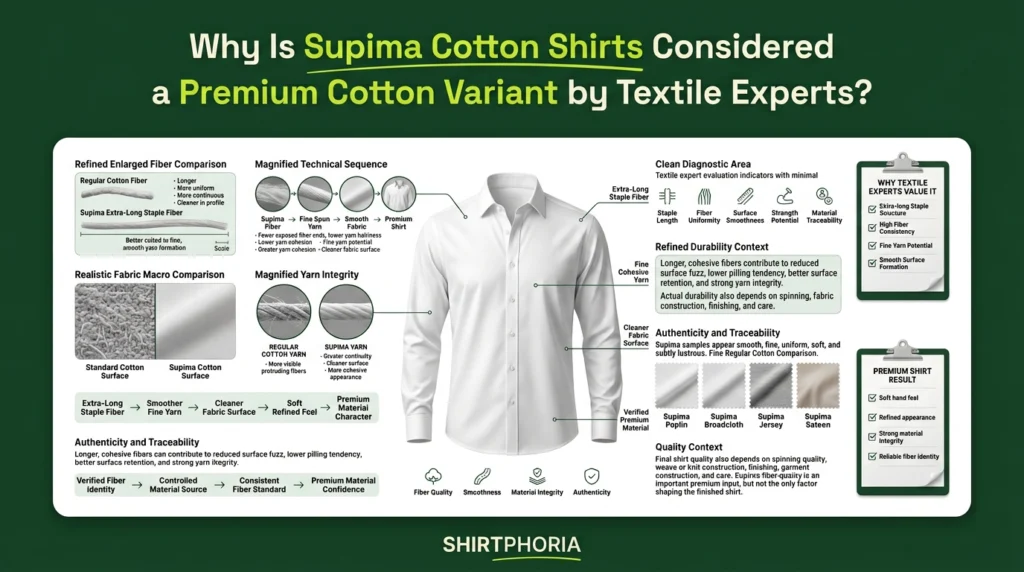
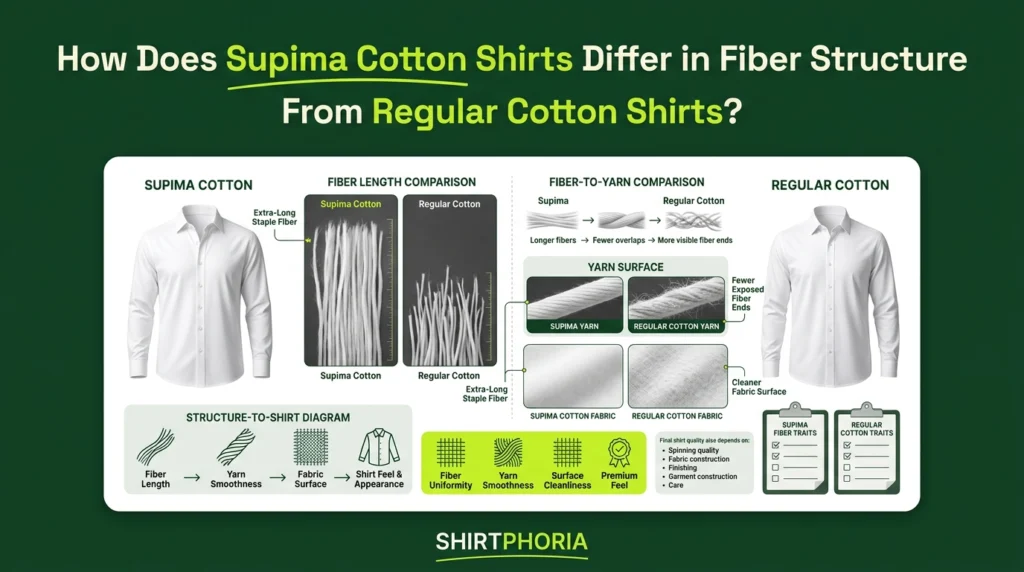
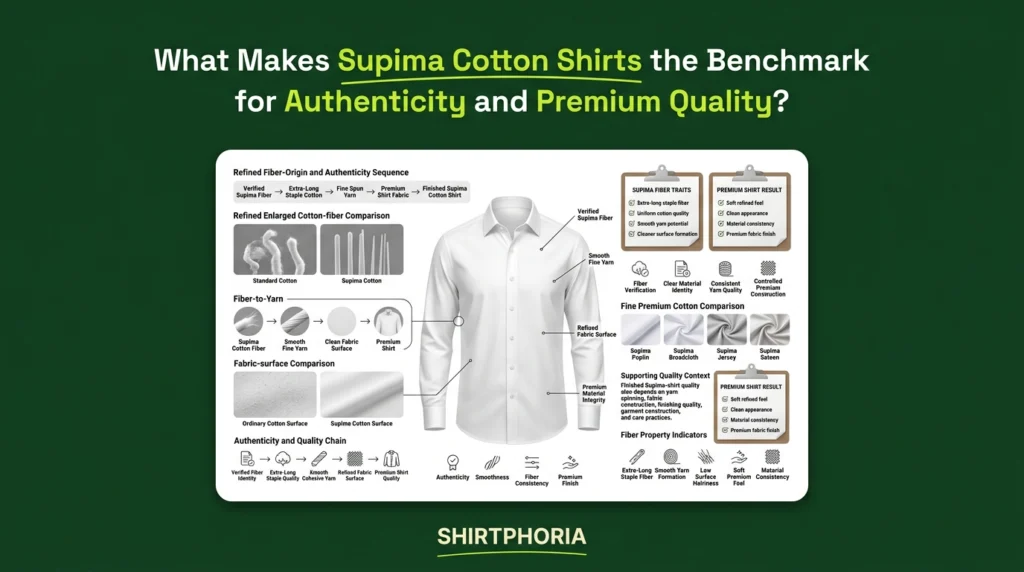
Premium cotton can change a T-shirt’s presentation by improving hand feel, smoothness, and perceived refinement when the knit structure and finishing are also strong.
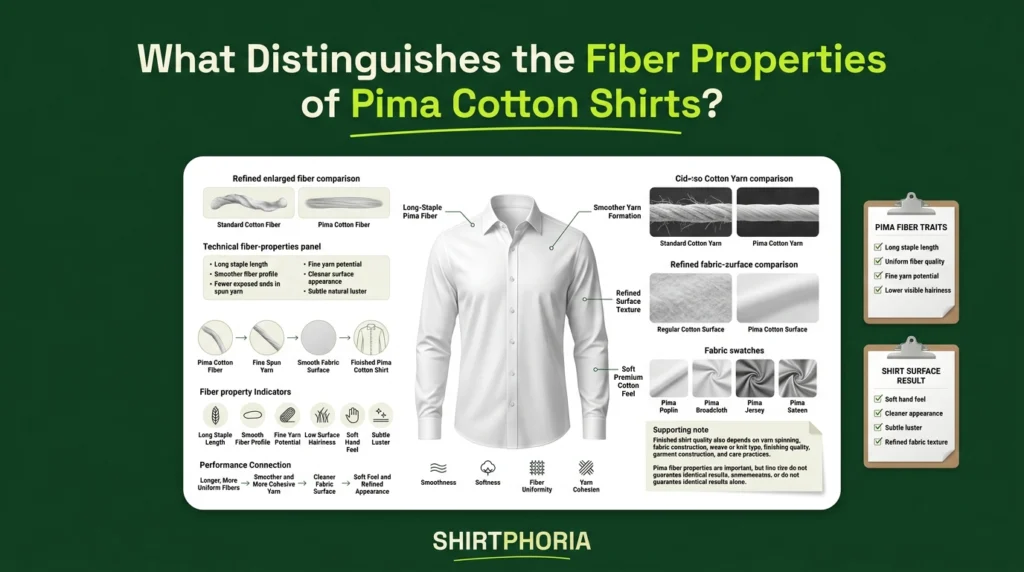
Pima cotton is commonly associated with extra-long staple fibers, softness, and a smoother hand feel. This is why Pima cotton is often discussed in relation to refined cotton garments and premium basics.
Premium presentation still depends on more than fiber name. Knit density, finishing, stitching, neckline stability, fabric weight, cut, and care all affect whether the T-shirt keeps its shape and looks refined.
The limitation is construction quality. A premium fiber can still perform poorly if the neckline stretches, the seams twist, the fabric is too thin for the use case, or the fit geometry does not match the wearer’s proportions.
How Can You Compare T-Shirt Fits for Different Fashion Use-Cases?
| T-Shirt Fit Type | Primary Geometry | Best Use-Case | Recommended Fabric |
|---|---|---|---|
| Slim Fit | Close to torso, higher armholes, shoulder seam near outer shoulder point | Layering, under-blazer styling, athletic silhouette | Lightweight or mid-weight jersey with enough recovery |
| Classic / Regular | Straight side seams, moderate chest ease, natural shoulder placement | Daily casualwear, basic layering, balanced wardrobes | Mid-weight cotton or cotton blend |
| Boxy / Relaxed | Wider chest, straighter torso, often slightly cropped | Modern casualwear, streetwear, relaxed tailoring | Mid-weight to heavyweight cotton |
| Oversized | Dropped shoulders, wider sleeves, longer or looser body | Streetwear, comfort, bold casual volume | Structured heavy cotton or stable jersey |
T-Shirt Fit Diagnostic Ranges
| Diagnostic Dimension | Slim Fit Signal | Regular Fit Signal | Boxy Fit Signal | Oversized Fit Signal |
|---|---|---|---|---|
| Shoulder Position | Seam sits near the outer shoulder point / acromion area | Seam sits close to natural shoulder edge | Seam may sit slightly wider than shoulder | Seam drops below shoulder line |
| Chest Ease | Close to body with light tension | Comfortable ease without pulling | Wider chest block | Intentionally loose and spacious |
| Sleeve Shape | Shorter, closer sleeve | Standard sleeve width | Wider sleeve opening | Dropped or longer sleeve |
| Torso Shape | Tapered or body-following | Straight side seams | Wide, cropped, square body | Long, loose, draped body |
| Hem Position | Around upper hip | Around mid-hip | Often slightly cropped | Often longer, sometimes below hip |
| Best Use Case | Layering, under-blazer, athletic silhouette | Daily casual wear | Modern casualwear, streetwear, structured relaxed outfits | Comfort, streetwear, bold casual volume |
| Main Risk | Too tight or clingy | Too plain if fabric is weak | Can shorten the torso if cropped badly | Can reduce visual height if too long or wide |
Fabric Weight and Use-Case Signals
| Fabric Category | Common Signal | Best Use Case | Main Limitation |
|---|---|---|---|
| Lightweight Jersey | Soft drape, easy layering, less structure | Undershirts, summer layering, relaxed casual wear | Can cling, become transparent, or lose shape |
| Mid-weight Cotton | Balanced structure and comfort | Daily T-shirts, casual outfits, smart-casual layering | May not create strong architectural shape |
| Heavyweight Cotton | Structure, opacity, boxier drape | Streetwear, premium casual looks, standalone outfits | Can feel warmer in hot weather |
| Performance Synthetic Blend | Stretch, sweat management, quick-dry behavior | Training, hiking, travel, activewear | Can show sheen, cling, or athletic styling cues |
| Pima Cotton / Long-Staple Cotton | Smooth hand feel and premium softness | Elevated casualwear, refined basics | Higher quality still depends on knit density, finishing, and construction |
Which T-Shirt Fit Mistakes Cause Styling Problems?
T-shirt fit mistakes occur when the garment’s shoulder placement, fabric weight, chest ease, sleeve shape, or hem length conflicts with the outfit’s intended use case.
A T-shirt can be too tight, too loose, too thin, too long, too short, too shiny, or too weakly structured for the role it needs to perform. The problem is not only size. A shirt can technically fit the body while still failing the outfit, climate, layering system, or dress-code context.
| Mistake | Visual / Functional Problem | Better Fix |
|---|---|---|
| Shoulder seam sits too far inside the shoulder | Makes the upper body look squeezed or undersized | Choose a slim or regular fit with the seam near the outer shoulder point |
| Shirt pulls across chest or stomach | Creates unwanted tension and cling | Increase chest ease or use a heavier fabric with better drape |
| Oversized tee is too long | Shortens the leg line and reduces visual height | Choose a slightly cropped oversized fit or balance it with higher-rise trousers |
| Fabric is too thin for smart-casual styling | Can look transparent, clingy, or too casual | Use mid-weight or structured cotton |
| Heavyweight tee is worn in extreme heat | Can feel too warm or restrictive | Choose lighter jersey or a more breathable knit |
| T-shirt bunches under blazer | Creates bulk under the jacket | Use slim or regular fit with controlled sleeve and hem length |
| Neckline is stretched or collapsed | Makes the outfit look worn out | Choose stronger ribbing or retire the shirt from polished outfits |
| Performance tee is too shiny for smart-casual use | Looks too athletic beside tailored pieces | Use matte cotton, refined jersey, or a cleaner technical blend |
What Are the Key Takeaways for T-Shirt Fit and Adaptation?
The key takeaways for mastering the modern T-shirt are that fit geometry shapes silhouette, fabric weight controls structure, and styling context determines whether the garment works casually, actively, or smart-casually.
Use this checklist before buying, styling, layering, or replacing a T-shirt:
Frequently Asked Questions
A T-shirt fits well when the shoulder placement, chest ease, sleeve shape, torso drape, and hem length support the intended silhouette without pulling, twisting, collapsing, or overwhelming the body.
A T-shirt can work in smart-casual outfits when it is clean, opaque, well-fitted, structured enough, and paired with controlled pieces such as tailored trousers, a blazer, or clean outerwear.
Slim fits sit closer to the body, regular fits use balanced ease, boxy fits use a wider and often shorter block, and oversized fits use dropped shoulders, extra volume, and looser proportions.
Heavyweight cotton often improves structure and opacity, but it is not always better. Heat, knit quality, cut, recovery, finishing, and the intended use case still determine whether the fabric works well.
Performance T-shirts can look too sporty when sheen, mesh panels, compression fit, visible seams, or athletic construction cues conflict with tailored or smart-casual pieces.
Terms Explained
| TERM | DEFINITION |
|---|---|
| Acromion area | The outer shoulder landmark used to judge classic T-shirt shoulder placement, while still allowing variation by cut and design intent. |
| Drop shoulder | A construction choice where the sleeve seam sits below the natural shoulder line to create relaxed or oversized volume. |
| GSM | Grams per square meter, a fabric-weight measurement that helps indicate light, medium, or heavyweight T-shirt structure. |
| Jersey knit | A soft knit structure commonly used in T-shirts because it provides drape, comfort, and natural stretch. |
| Heavyweight cotton | A heavier cotton fabric category that usually gives a T-shirt stronger opacity, structure, and standalone presence. |
| Flatlock seams | Low-profile seams designed to sit flatter against the body and reduce rubbing during repeated movement. |
| High-low styling | A styling method that combines a casual garment, such as a T-shirt, with more polished pieces like blazers or tailored trousers. |
| Neckline stability | The ability of a T-shirt collar or ribbing to keep shape after wear and washing, which strongly affects perceived polish. |
| Pima cotton | A cotton variety commonly associated with extra-long staple fibers, smooth hand feel, and refined casual basics. |
| Visual dissonance | A styling mismatch that happens when the garment’s fabric, fit, or construction contradicts the setting or surrounding pieces. |
Conclusion
In conclusion, the modern T-shirt is best understood as a flexible sartorial tool shaped by fit geometry, fabric construction, and styling context.
Moving a T-shirt across different use cases requires understanding shoulder placement, torso drape, fabric weight, and outfit context. The garment may look simple, but its visual effect changes quickly when the shoulder seam shifts, the chest gains ease, the hem length changes, or the fabric becomes heavier or lighter.
Slim, regular, boxy, and oversized fits each solve different styling problems. Slim fit supports layering and sharper body lines. Regular fit supports everyday balance. Boxy fit creates modern structure. Oversized fit creates relaxed volume and streetwear proportion.
Fabric weight, GSM, knit structure, and construction quality affect comfort, silhouette, opacity, durability, and polish. Lightweight jersey supports layering and heat comfort. Mid-weight cotton supports daily wear. Heavyweight cotton creates stronger structure. Performance blends improve activity comfort. Premium cotton can improve hand feel when the construction is also strong.
By mastering the relationship between T-shirt fit and use-case adaptation, individuals can maintain a highly functional, versatile wardrobe with a minimal number of high-quality pieces.
© 2026 Shirtphoria. All rights reserved.