How Can a Crewneck Shirt Be Selected Based on Fit and Style Attributes?
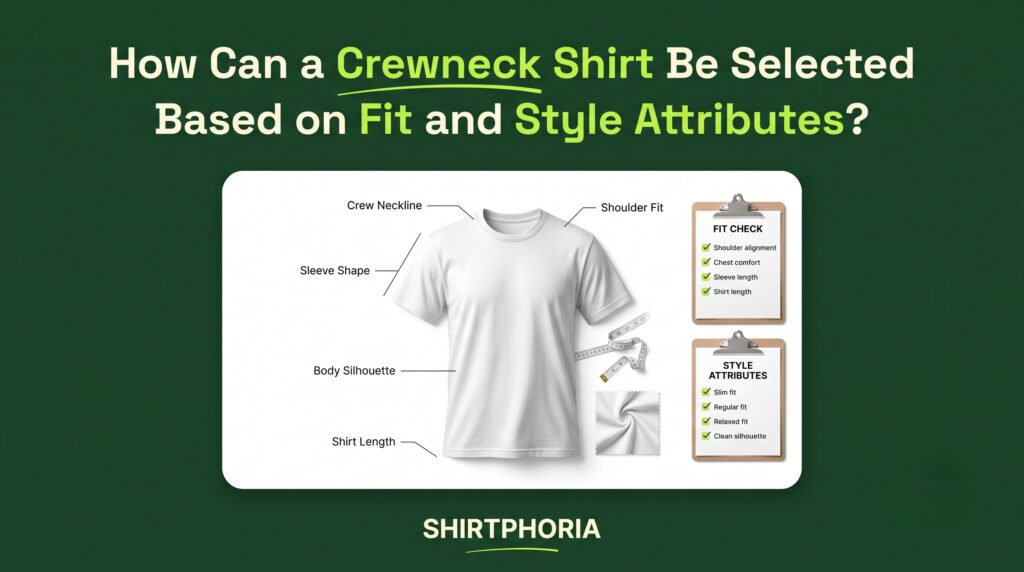
Selecting the right crewneck shirt requires balancing two critical axes: fit attributes such as shoulder alignment, torso allowance, and hem placement, and style attributes such as collar ribbing, fabric weight, and layering function.
The crewneck is one of the most familiar garments in menswear, yet many people choose one by reading the size label alone. A medium from one manufacturer may fit like a small or large from another, so the label cannot explain whether the shoulder seam is correctly positioned, the torso has enough room, or the neckline will maintain its shape.
A more reliable approach is to evaluate the crewneck as a complete fit-and-style system. The shoulder geometry controls the sleeve fall. Torso allowance determines the silhouette. Hem placement affects body proportions and layering. Collar construction influences neckline stability, while fabric weight determines whether the shirt performs better as a base layer or a standalone garment.
This guide provides a technical framework for assessing:
- How to diagnose shoulder fit.
- How to evaluate torso drape.
- How to judge hem placement.
- How collar ribbing affects quality.
- How fabric weight changes layering and standalone performance.
- How to choose between Slim, Regular, and Oversized fits.
- How to troubleshoot collar gaping and neckline mismatch.
Why the Crewneck Shirt Is a Reliable Test of Fit and Style Adaptability
A crewneck shirt provides a useful test of fit because its simple construction leaves little room for proportion errors to remain hidden. The neckline, shoulder seams, sleeves, torso, and hem are all clearly visible, making small differences in cut and construction noticeable.
How Does a Crewneck Work as Both a Base Layer and Standalone Shirt?
A crewneck works as both a base layer and standalone shirt because its simple neckline, flat front, and adaptable fabric weight allow it to sit under outerwear or carry an outfit on its own.
This dual-purpose function makes crewneck selection more technical than it initially appears. A shirt that performs well beneath a fitted jacket may lack enough structure to look balanced when worn alone. Conversely, a substantial crewneck that creates a strong standalone silhouette may produce excessive Layering Bulk beneath close-fitting outerwear.
Lightweight crewnecks commonly create smoother layering because the fabric occupies less space around the chest, waist, sleeves, and armholes. However, thin material may cling, appear translucent, or lose visual structure when worn without an outer layer.
A heavyweight crewneck can create a cleaner standalone outline because the fabric resists collapsing against the body. The tradeoff is greater warmth, stiffness, and bulk beneath jackets or button-down shirts.
A crewneck fails when its fit or fabric weight does not match the task it is expected to perform.
The shirt’s intended role should therefore be defined before its size, fit category, or material weight is selected.
The Critical Role of Subtlety in Crewneck Selection
The critical role of subtlety in crewneck selection comes from the garment’s simple design, where small flaws in collar shape, shoulder placement, torso drape, or hem length become highly visible.
A structured jacket can partially conceal proportion problems through lapels, pockets, panels, seams, and hardware. A plain crewneck has fewer design elements to redirect attention. Its visual quality depends heavily on clean geometry and controlled fabric behavior.
A shoulder seam positioned slightly too far inward may create chest tension and an awkward sleeve angle. Excess torso fabric can make an otherwise suitable shirt appear shapeless. A stretched collar can weaken the entire presentation because the neckline sits close to the face.
Subtle differences also affect versatility. A narrow collar band may look refined under a jacket, while a thicker Rib Knit collar can give a heavyweight crewneck more visual presence. Neither construction is automatically superior; each should match the garment’s fabric, fit, and intended styling role.
Before comparing individual crewneck fits, readers should understand how broader T-shirt fit styles affect styling versatility, body balance, and use-case adaptation.
Deconstructing the Key Fit Attributes of a Crewneck Shirt
The most important fit attributes of a crewneck are shoulder alignment, torso allowance, sleeve behavior, and hem placement. These points should be examined together because changing one area can affect how the rest of the garment hangs.
Shoulder Alignment as the Foundation of Crewneck Fit
Shoulder alignment acts as the foundation of crewneck fit because the shoulder seam controls how the shirt frames the upper body and how the sleeves fall.
For many Slim Fit and Regular Fit crewnecks, the shoulder seam usually works best when it lands near the outer edge of the shoulder bone. This position often allows the sleeve to fall cleanly without pulling across the chest or collapsing down the upper arm.
The position should be treated as a practical diagnostic reference rather than an inflexible rule. SANVT’s T-shirt fit guidance places the shoulder seam near the shoulder bone and suggests approximately 2.5–5 centimetres of loose side fabric, with the shirt ending around the fly area. Body posture, Shoulder Slope, garment design, and personal fit preference can justify controlled variation from those reference points.
Shoulder Slope is the downward angle from the base of the neck toward the outer shoulder point. A shirt pattern cut too straight for a strongly sloped shoulder may bunch near the neckline, pull diagonally across the chest, or create excess fabric near the sleeve head.
A shirt cut for more slope than the wearer needs may form folds near the upper chest or cause the neckline to sit unevenly. The issue may therefore come from the shape of the pattern rather than the labelled size alone.
Too narrow: The seam sits inside the shoulder point, the sleeve pulls upward, and horizontal tension may appear across the upper chest. Arm movement can also feel restricted.
Balanced: The seam sits near the shoulder point, the sleeve falls cleanly, and the upper body can move without strong pulling or fabric collapse.
Too dropped without design intent: The seam falls well onto the upper arm, weakening the shoulder line and creating a loose sleeve hang that may look untidy beneath structured outerwear.
An Oversized Fit is an important exception. Its shoulder seam may intentionally extend beyond the natural shoulder point, but the drop should be supported by proportional sleeve volume, torso width, length, and fabric weight.
How to Evaluate Crewneck Drape for Torso and Chest Fit
Evaluating crewneck drape requires assessing the torso allowance, which is the amount of fabric ease between the shirt and the body.
Torso Allowance is the extra space that determines whether a crewneck clings to the body, skims its outline, or hangs with visible volume. It should accommodate breathing, sitting, reaching, and ordinary movement without producing unnecessary side bulk.
Slim Fit: Uses minimal ease and follows the body more closely. It should define the torso without pulling across the chest, abdomen, or upper back.
Regular Fit: Uses moderate ease for movement and everyday versatility. Approximately 2.5–5 centimetres, or 1–2 inches, of loose side fabric can serve as a practical guideline for many regular T-shirt fits, although body proportions and fabric stretch may change the result.
Oversized Fit: Uses expanded ease to create intentional width, volume, and drape. It should look deliberately designed rather than simply oversized through random size increases.
Torso Allowance → Controls Fabric Drape → Defines the Final Silhouette
Too little allowance may cause the material to cling to the abdomen, outline the body more than intended, or form horizontal pulling lines across the chest. Movement can also pull the hem upward.
Balanced allowance lets the material skim the torso while maintaining comfortable movement. It also reduces the chance of excessive bunching beneath a jacket.
Too much allowance can create side folds, uncontrolled boxiness, and layering bulk. These effects may be appropriate in a purposeful Oversized Fit, but they usually weaken a conventional Slim or Regular silhouette.
Fabric behavior must also be considered. A soft, lightweight knit may cling even when its measurements appear generous, while a dense heavyweight knit may stand away from the body with less measured allowance.
Ideal Crewneck Length and Hem Placement
Ideal crewneck length depends on whether the shirt is intended for regular wear, layering, tucking, or oversized styling.
For many regular crewneck outfits, the hem commonly works well when it covers the waistband and falls around the beltline to the lower zipper or fly area. This gives the wearer enough coverage when reaching or sitting without allowing the shirt to overwhelm the upper legs.
Hem Placement should be evaluated while standing, sitting, and lifting the arms. A shirt that appears suitable in a static mirror test may rise substantially during movement.
Too short: The shirt may expose the midriff, leave the waistband uncovered, create awkward torso cropping, or pull out of the trousers when tucked.
Balanced: The hem covers the waistband area, remains useful during normal movement, and preserves a clear visual division between the torso and legs.
Too long: The shirt may bunch around the hips, reduce the apparent length of the legs, and produce excess material beneath jackets or overshirts.
Body proportions can alter the ideal result. A person with a long torso may require additional body length without needing wider shoulders or more chest room. Someone with shorter legs may benefit from a slightly shorter hem that still provides appropriate coverage.
An intentionally Oversized Fit can justify a boxier or extended hem when the added length is supported by deliberate width, dropped shoulders, sleeve balance, and adequate fabric structure. A long regular shirt purchased several sizes too large will not necessarily create the same result.
Essential Style Attributes That Dictate Crewneck Quality and Use-Case
Fit determines how the crewneck occupies the body, while construction and material determine how it behaves during wear. Collar structure and fabric weight are particularly important because they influence the shirt’s appearance, durability, warmth, and layering suitability.
How Collar Ribbing Affects Crewneck Quality and Longevity
Collar ribbing affects crewneck quality because the neckline must recover its shape after stretching, washing, and repeated wear.
Collar ribbing is the knitted band attached around the neck opening. Its purpose is to provide controlled stretch, maintain the circular neckline, and return toward its original shape after the shirt passes over the head.
Knitted material is formed through intermeshing yarn loops, allowing more flexibility than many woven structures. CottonWorks’ explanation of single and double knits identifies rib knits as double-knit structures and explains that double knits tend to provide greater stability and reduced edge curling compared with single knits.
The performance of a collar depends on more than visible thickness. Rib gauge, stitch density, yarn quality, fiber composition, neckband dimensions, seam construction, and washing habits all influence Collar Recovery.
Double-Needle Stitching uses two parallel rows of visible stitching. Depending on the garment’s construction, it can reinforce seam areas and help control the fabric around the neckline or shoulder region.
Binder Neck Construction finishes the neckline by wrapping or binding its edge with a separate strip of fabric. A well-proportioned binder can create a clean finish and improve stability, although the result depends on the stretch ratio, fabric, and sewing quality.
A weak rib collar may develop wavy edges, Collar Gaping, or poor recovery after repeated washing and wear. It should not be assumed that every thin collar will fail, because performance also depends on knit density, fiber blend, stitching, laundering, and wear frequency.
Too loose or weak: The neckline may ripple, sag, expose more of the undershirt than intended, or develop the uneven appearance commonly called “bacon neck.”
Balanced: The collar lies flat, frames the neck evenly, stretches enough to pass over the head, and returns close to its original shape.
Too thick or tight: The collar may feel restrictive, sit heavily around the neck, or look visually bulky on someone with a shorter neck.
A simple shop test is to stretch a small section of the collar gently and release it. A suitable collar should recover smoothly without remaining visibly distorted. This test cannot predict long-term durability, but it can expose obvious weakness before purchase.
How Fabric Weight Affects Crewneck Style and Performance
Fabric weight fundamentally alters a crewneck’s style and performance because lighter fabrics prioritize breathability and layering, while heavier fabrics provide structure and standalone presence.
Fabric Weight is commonly measured in grams per square metre, abbreviated as GSM, or ounces per square yard. Core Fabrics’ fabric-weight guide explains that weight influences drape, structure, durability, and the functional suitability of a material. It also notes that fiber content and knit construction can make two fabrics with similar numerical weights behave differently.
- Lightweight: About 3.5–4.8 oz or approximately 120–160 GSM.
- Midweight: About 4.8–6 oz or approximately 160–200 GSM.
- Heavyweight: About 6 oz or more, commonly starting around 200 GSM.
These categories may overlap between manufacturers. Fiber type, yarn thickness, stitch density, finishing, and fabric construction can make one 180 GSM shirt feel more substantial than another shirt with the same listed weight.
A lightweight crewneck usually allows more airflow and creates less bulk beneath outerwear. However, it may become sheer, clingy, or visually weak depending on color, knit density, fiber, and finish.
A midweight crewneck often provides a practical balance between breathability and structure. It can work alone in mild conditions while remaining manageable beneath casual outerwear.
A heavyweight crewneck usually creates a firmer silhouette and stronger standalone presence. It may also retain more heat, feel stiff during early wear, dry more slowly, or become uncomfortable under fitted jackets.
Fabric weight should therefore be matched to the climate, fit category, personal temperature preference, and intended outfit role rather than treated as a direct measurement of quality.
Disclaimer
This article provides general educational guidance. Always compare fit advice with the garment’s measurements, care label, and your personal comfort.
Comparing Crewneck Fits: Slim, Regular, and Oversized Attributes
Fit labels become more useful when they are connected to observable garment characteristics. Shoulder position, torso allowance, length, sleeve volume, and fabric structure should all support the stated fit category.
Crewneck Fit Categories Mapped to Technical Specifications
Mapping crewneck fit categories to technical specifications shows how shoulder seam position, torso allowance, and fabric behavior determine the garment’s use case.
| Fit Category | Shoulder Seam | Torso Allowance | Layering Suitability | Failure Risk |
|---|---|---|---|---|
| Slim Fit | Near the shoulder point | Minimal ease | Good under jackets | Can cling or restrict movement if too tight |
| Regular Fit | Near the shoulder point | Moderate ease, often around 2.5–5 cm or 1–2 inches on many average builds | Excellent for general use | Can look visually weak if the fabric is too thin or the drape is uncontrolled |
| Oversized Fit | Drops past the shoulder point by design | Expanded drape | Poor under fitted outerwear | Can collapse or visually shorten the legs if it is too long or too light |
An Oversized Fit is not the same as purchasing a Regular Fit several sizes too large. Random sizing increases may widen the neckline, extend the hem, lower the armholes, and lengthen the sleeves without creating balanced proportions.
A successful oversized crewneck needs intentional width, shoulder drop, sleeve balance, and fabric weight.
The neckline should remain controlled even when the body is wide. The sleeves should relate to the dropped shoulder position, and the fabric should have enough structure or purposeful drape to support the larger silhouette.
When to Match Fabric Weight to Specific Crewneck Use Cases
Matching fabric weight to specific crewneck use cases ensures the garment performs correctly in its climate, outfit role, and layering position.
| Weight Range | Best Climate | Layering Task | Ideal Fit Category | Failure Risk |
|---|---|---|---|---|
| Lightweight | Hot weather or indoor layering | Undershirt or base layer | Slim or Regular | May become sheer, clingy, or weak as a standalone shirt depending on knit density, fiber, color, and finish |
| Midweight | Mild or transitional weather | Everyday standalone wear or light layering | Regular | May lack structure at the lighter end or feel warm indoors at the heavier end |
| Heavyweight | Cool weather or standalone styling | Outer layer or statement T-shirt | Regular or Oversized | May retain heat, feel stiff, dry slowly, or create bulk under jackets |
The best fabric weight depends on climate, body comfort, layering requirements, fabric density, and the amount of visual structure desired.
A person living in a warm climate may find a lightweight or lower-midweight crewneck more useful throughout the year. A heavyweight shirt may still work indoors or during cooler periods, but it should not be selected solely because heavier fabric is perceived as more premium.
How to Style a Crewneck Shirt for Layering Tasks
Successful layering depends on controlling fabric volume at the torso, sleeves, armholes, and neckline. The inner crewneck should support the outer garment rather than creating folds, pressure points, or competing lines.
Layering with an Open Collar Under a Jacket or Cardigan
Layering a crewneck with an open collar under a jacket or cardigan requires the shirt to lie flat, avoid torso bunching, and keep the neckline clean.
Slim or Regular lightweight-to-midweight crewnecks usually work well beneath structured outerwear because their controlled Torso Allowance reduces side-seam bunching. The sleeves should also fit closely enough to enter the jacket sleeves without twisting or collecting around the upper arms.
For example, a lightweight Slim Fit crewneck can work beneath a Harrington jacket because its reduced torso allowance helps prevent fabric from gathering around the side seams and waistband.
The crewneck collar should remain visible as a clean, even line inside the jacket opening. A stretched or rippled collar can make the entire combination appear worn, even when the jacket fits correctly.
A heavyweight crewneck may work beneath a roomy chore jacket, overshirt, or unstructured cardigan. It is less suitable under a close-fitting blazer or narrow-sleeved jacket because the additional fabric can restrict movement and distort the outer layer.
Layering Under a Button-Down Shirt
Layering a crewneck under a button-down shirt requires a clean, high neckline that supports the outer shirt instead of competing with its collar structure.
A crewneck can work under an open Oxford or casual button-down when the collar is flat, narrow enough to avoid excessive bulk, and intentionally visible. A loose neckline that disappears beneath one side of the shirt collar can make the layering appear accidental.
Choose a lower-contrast crewneck for a subtle base layer, or choose intentional contrast when the T-shirt is meant to be visible.
Micro-Checklist: Crewneck Layering Success Factors
- The T-shirt is Slim or Regular Fit under fitted outerwear.
- The collar ribbing is firm, flat, and not visibly stretched.
- The fabric weight is light enough to avoid unnecessary bulk.
- The neckline height supports the outer garment.
- The color contrast is intentional rather than accidental.
The button-down should still close comfortably if required. Pulling between the buttons indicates that the combined fabric volume is too high or that the outer shirt is too fitted for the layering task.
Troubleshooting Crewneck Shirt Fit and Selecting Alternative Necklines
A crewneck may have the correct labelled size and still fail because of collar fatigue, incompatible shoulder geometry, excessive torso allowance, incorrect length, or an unsuitable neckline shape.
What to Do When the Crewneck Neckline Gapes
When a crewneck neckline gapes or sags, the most likely causes are weak collar recovery, poor neckline construction, or fabric fatigue from repeated wear and washing.
Minor rippling does not always indicate permanent damage. Moisture, storage, or temporary stretching can disturb the neckline without destroying its structure.
Minor ripple: Wash the shirt according to its care label, gently reshape the neckline, and air-dry it flat before making a final judgment.
Persistent gaping: Treat repeated sagging as a probable construction or recovery issue, particularly when the neckline remains uneven after reshaping.
Blown-out ribbing: Replacement is often more practical than tailoring, depending on the garment’s value, the availability of matching rib fabric, and local alteration costs.
High-value garment: Consult a tailor when replacing the neckband would preserve enough financial, practical, or personal value to justify the work.
Avoid hanging a wet crewneck from its neckline because the garment’s weight may stretch the collar and shoulder area. Washing temperature, aggressive drying, repeated pulling, and storage practices can also affect Collar Recovery.
Neckline failure is highly visible because the collar sits next to the face. Even a well-fitting torso can appear poorly presented when the collar gapes or forms uneven waves.
When the Crewneck Fit Fails for Your Body Type
If the classic high neckline of a crewneck repeatedly creates neck compression, chest heaviness, or poor upper-body balance, an alternative neckline may suit the wearer better.
This is a question of neckline compatibility rather than a flaw in the wearer’s body. Neck length, shoulder width, chest volume, face shape, garment color, collar thickness, and styling context can all affect how a high crewneck appears.
People with shorter necks, broader chests, or more pronounced upper-body mass may find that a thick, high crewneck creates visual compression. A slightly wider crewneck opening, finer collar ribbing, or lighter fabric may reduce that effect without requiring a completely different neckline.
A V-neck can visually open the neckline, especially when a high crewneck feels compressive. The depth should still match the outfit and intended level of coverage.
If the crewneck neckline does not suit your body type, the next logical step is to evaluate V-neck shirts.
Final Checklist: Selecting the Right Crewneck Shirt
A final evaluation should combine fit, construction, fabric, movement, and intended use. Judging only one attribute can lead to a shirt that looks suitable in the fitting room but performs poorly during regular wear.
Crewneck Decision Flow: Path to Correct Fit
The path to correct crewneck fit requires following a step-by-step diagnostic flow to assess shoulder alignment, torso drape, hem placement, collar recovery, fabric weight, and intended purpose.