How Does a Polo Shirt Express Identity Through Structure and Fabric Composition?
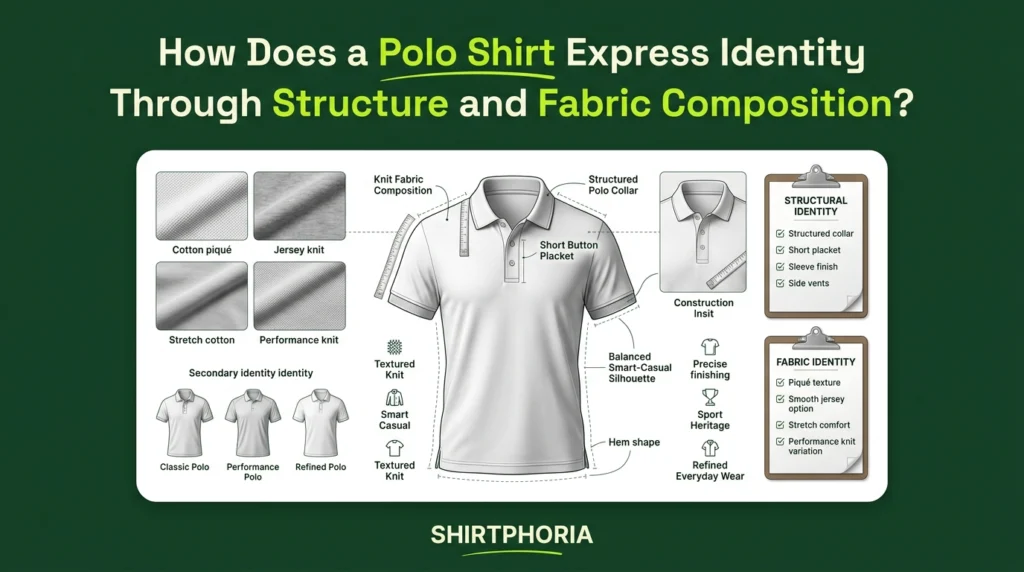
A polo shirt expresses identity through the interaction of fabric composition, knit texture, collar structure, placket design, sleeve shape, and fit.
Its identity is not created by a brand name alone. Visible and tactile details determine whether a polo reads as classic, sporty, relaxed, polished, technical, or suitable for some business-casual settings.
Readers comparing this article with the broader garment category can start with the main guide to polo shirts.
Two systems are especially important:
- Fabric Composition: fiber type, knit construction, texture, weight, finish, softness, luster, and performance characteristics.
- Structural Design: collar type, placket, buttons, sleeves, cuffs, hem, and fit.
The historical development of the modern polo also helps explain this combination. Lacoste connects René Lacoste with the 1933 introduction of the L.12.12 polo and its Petit Piqué construction. Lacoste polo history
Understanding polo shirt identity therefore means reading the garment as a complete system rather than assuming that one fabric, collar, button, or fit automatically determines its character.
Why Do Polo Shirt Fabric and Structure Shape Style Identity?
Polo shirt fabric and structure shape style identity because they control how the garment looks, feels, drapes, frames the neckline, and aligns with a specific dress context.
The relationship can be simplified as:
Fabric + Structure → Visual Signal → Style Identity
A textured piqué polo may lean toward a classic or sport-derived identity. A smoother interlock or mercerized cotton polo may appear cleaner or more polished.
Neither result is automatic.
Color, fit, collar behavior, placket construction, buttons, trousers, footwear, and the surrounding dress context can strengthen or weaken the signal created by the fabric.
Style identity is therefore a collection of signals rather than a fixed rule.
How Does Texture Influence Polo Shirt Identity?
Texture influences polo shirt identity by changing how the fabric catches light, creates surface depth, and signals casualness, polish, or sportiness.
A visibly textured fabric creates more surface variation. Piqué is a clear example because its knitted texture gives the garment more visual depth than a smooth jersey surface.
Textured fabrics often read as more casual or sport-derived when that texture is visually prominent.
Smoother fabrics generally reduce visible surface roughness and may create a cleaner appearance.
The relationship is:
Fabric Texture → Changes Surface Signal → Influences Perceived Formality
However, texture is only one part of the system.
A smooth polo with a weak collar and poor fit may look less polished than a textured piqué polo with a clean collar, controlled silhouette, and coordinated outfit.
Texture should therefore be evaluated together with fit, color, collar, placket, buttons, and use context.
How Does Fabric Composition Balance Comfort and Polish?
Fabric composition balances comfort and polish by determining how the polo feels against the body, how it drapes, and how refined or technical the surface appears.
Cotton-heavy polos often emphasize a natural handfeel and familiar knit character.
A cotton piqué may provide traditional texture, while a smooth cotton jersey may create a softer and more casual feel.
A Poly-cotton Blend combines cotton and polyester in proportions chosen by the manufacturer. Depending on its construction, the blend may offer easier care, quicker drying, added durability, or a different surface appearance.
A Performance Blend may also include elastane or similar stretch fibers when additional mobility is needed.
The basic relationship is:
Fiber Composition → Controls Handfeel and Drape → Shapes Use-Case Identity
Fiber content alone still does not determine the result.
Fabric weight, knit density, finishing, stretch, recovery, collar design, and fit can substantially change how the final polo behaves.
A heavy cotton polo, for example, may feel warmer or less active-oriented in hot weather, but heavy cotton does not automatically restrict the garment to low-intensity use.
How Do Core Fabric Compositions Define Polo Shirt Identity?
Core fabric compositions define polo shirt identity by giving each polo a different balance of texture, breathability, softness, stability, luster, and technical performance.
Fabric should be evaluated as a complete construction.
The same fiber can behave differently when knit weight, yarn quality, density, finishing, and garment design change.
For this reason, no single polo fabric is universally superior.
How Does Piqué Knit Shape Classic Polo Shirt Identity?
Piqué knit shapes classic polo shirt identity by creating a textured surface associated with the traditional sport-derived polo.
Piqué is a textured knit widely associated with polo shirts. Instead of presenting a completely flat surface, its knitted structure creates visible depth.
Petit Piqué is closely associated with Lacoste’s L.12.12 polo tradition.
The relationship can be summarized as:
Piqué Texture → Adds Surface Structure → Signals Classic Sport-Derived Identity
Piqué can also support breathability when its overall construction allows air and moisture to move comfortably.
That result should not be treated as guaranteed.
Breathability depends on several variables:
- yarn construction
- knit density
- fiber
- fabric weight
- finishing
- garment fit
- humidity
- temperature
A lightweight piqué can feel very different from a dense and heavy piqué.
Fiber quality can also affect the experience. A polo made from longer-staple or carefully processed cotton may feel smoother than one made from coarser yarn, but the complete knit and garment construction still matter.
How Do Jersey and Interlock Shape Smooth Polo Shirt Identity?
Jersey and interlock shape smooth polo shirt identity by reducing visible texture and creating a flatter surface that can look softer, cleaner, or more modern.
Jersey is a relatively smooth knit commonly associated with T-shirts and soft casual garments.
A jersey polo can therefore create a relaxed identity with less surface texture than traditional piqué.
Its softness can work well for:
- weekend wear
- travel
- casual layering
- warm-weather outfits
- relaxed styling
However, very thin jersey may cling to the body, lose shape, or make the polo appear closer to a collared T-shirt.
Interlock is a more stable double-knit category. It usually creates a smoother and more substantial surface than lightweight jersey.
The relationship is:
Smooth Knit Surface → Reduces Texture → Creates Cleaner Visual Identity
Interlock can support a cleaner polo silhouette when its weight and structure suit the garment.
Smoothness does not automatically mean formality.
A very thin jersey polo may remain highly casual, while a dense interlock polo may appear polished but feel too warm for some climates.
How Do Supima Cotton and Mercerized Cotton Affect Polo Shirt Identity?
Supima cotton and mercerized cotton affect polo shirt identity by changing the perceived refinement of the fabric through fiber quality, softness, color behavior, and surface luster.
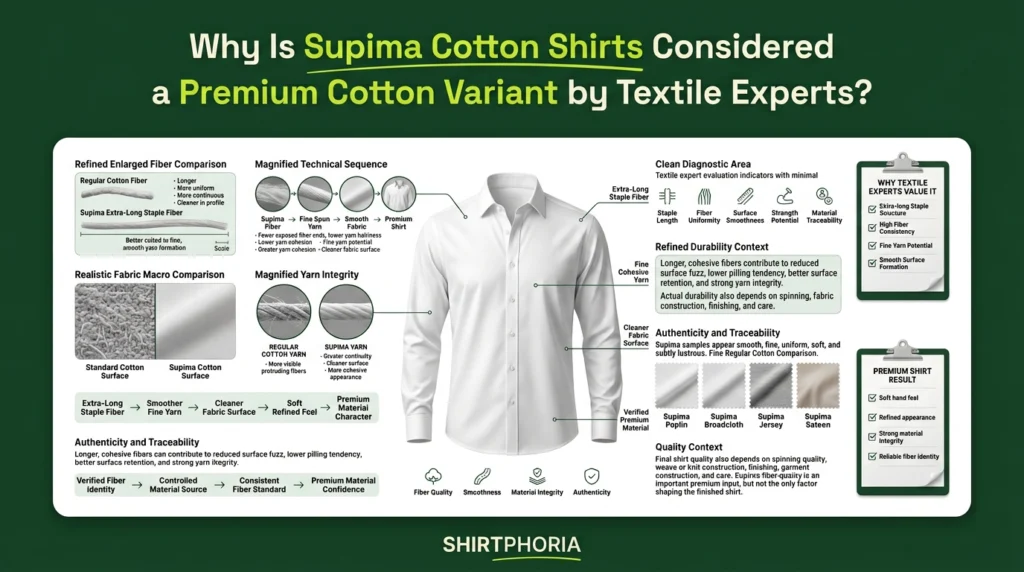
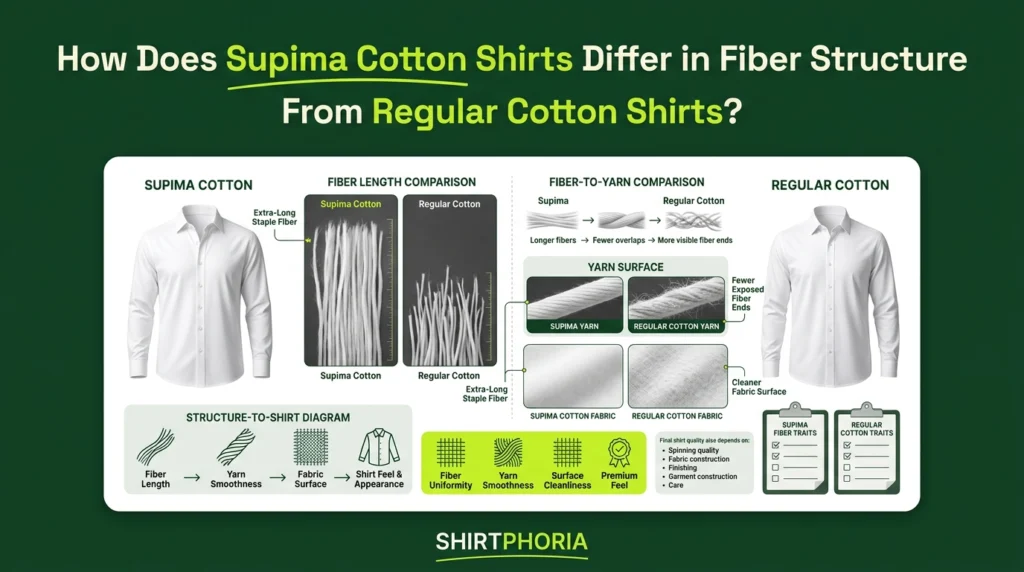
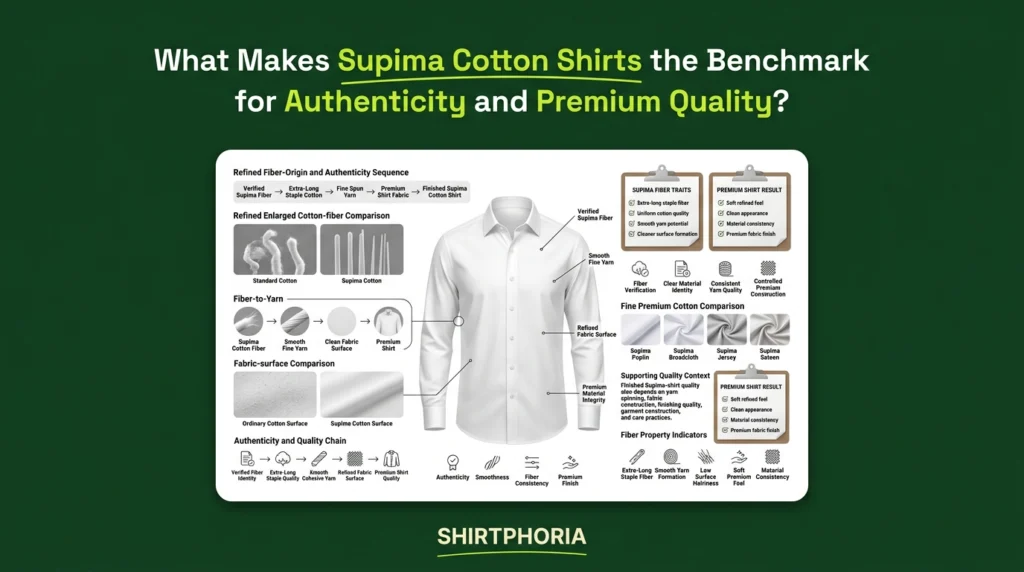
Supima Cotton is an extra-long staple cotton.
Supima explains that its extra-long fibers are associated with characteristics including strength, softness, and color retention. Supima cotton
In a polo shirt, these fiber characteristics can support a smooth and refined fabric when the yarn, knit, and finishing are also well controlled.
The presence of Supima cotton does not automatically make a polo formal or high quality in every other respect.
The collar can still collapse. The placket can still twist. The fit can still be poor.
Mercerized Cotton refers to cotton that has undergone a specific treatment.
CottonWorks defines mercerized cotton fabric as cotton treated with sodium hydroxide or caustic soda so the fibers swell, with effects that include increased luster. CottonWorks mercerized cotton guide
That increased surface luster can give a polo a smoother and more polished visual character.
The relationship is:
Fiber Quality or Finish → Changes Surface Refinement → Influences Polished Identity
Luster should still be balanced.
Too little visual refinement may not create the desired polished appearance, while excessive shine can make the garment look synthetic or overly dressy.
Neither Supima cotton nor mercerization guarantees that a polo is appropriate for a formal environment.
How Do Poly-Cotton and Performance Blends Affect Polo Shirt Identity?
Poly-cotton and performance blends affect polo shirt identity by moving the garment toward easier care, active use, stretch, or technical styling when the fabric is designed for those outcomes.
A Poly-cotton Blend combines polyester and cotton.
Depending on the ratio and construction, it may offer:
- easier maintenance
- faster drying
- improved shape retention
- reduced wrinkling
- different moisture behavior
- greater durability
A performance-oriented fabric may also include elastane or spandex to increase stretch.
Some designs use lightweight knits, mesh areas, vents, or moisture-management finishes.
The relationship is:
Technical Blend → Adds Performance Cues → Moves Polo Toward Active Identity
Technical construction does not make a polo entirely athletic.
A performance polo can still appear relatively polished when the surface is matte, the collar maintains its shape, the placket is clean, and the fit is controlled.
A shiny surface, highly visible mesh, contrast panels, or strong athletic detailing can move the same garment toward a more obvious active identity.
How Do Structural Design Elements Shape Polo Shirt Identity?
Structural design elements shape polo shirt identity because the collar, placket, sleeves, cuffs, and fit determine how the garment frames the body and signals its intended use.
Fabric creates the surface, but structural details organize that surface into a recognizable garment.
The relationship is:
Structural Detail → Frames the Body → Signals Use Context
A smooth premium fabric cannot create a polished polo by itself if the neckline collapses or the fit pulls badly.
Likewise, a traditional piqué polo can appear clean and refined when its structural details are well controlled.
How Do Collar Types Shape Polo Shirt Identity?
Collar types shape polo shirt identity by controlling whether the neckline reads sporty, soft, structured, relaxed, or polished.
A Ribbed Collar is made from rib-knit material.
It is common on traditional polo shirts because rib knitting provides flexibility and can create a distinct collar shape.
A ribbed collar often reinforces the classic sport-derived identity of a polo.
A Self-Collar is made from the same or very similar fabric as the body of the shirt.
This can create a more continuous surface between the body and neckline.
A well-constructed self-collar may look cleaner or more shirt-like when used with smooth fabric.
The relationship is:
Collar Type → Controls Neckline Signal → Shapes Polo Identity
Neither construction guarantees quality.
A weak self-collar can collapse or lose definition.
A ribbed collar with suitable density, attachment, and proportion can remain clean and polished.
Collar performance should therefore be judged by shape retention, proportion, density, fabric compatibility, and care behavior rather than collar category alone.
How Do Plackets and Buttons Shape Polo Shirt Identity?
Plackets and buttons shape polo shirt identity by controlling the neckline opening, visual polish, and perceived material quality.
A Placket is the reinforced opening at the upper front of the polo that holds buttons or another closure system.
Traditional polos commonly use visible two-button or three-button plackets.
This type of construction often reinforces a classic sport-derived appearance.
A hidden or visually reduced placket may create a cleaner neckline.
Placket depth also matters. A very short placket can look simple and sporty, while a longer or more refined opening can alter the shirt-like character of the garment.
Button material adds another signal.
Mother-of-Pearl buttons are made from natural shell material. They can signal higher material quality because of their natural surface and visual variation.
The relationship can be summarized as:
Placket + Button Material → Refines Neckline Detail → Influences Perceived Quality
Button material is still a supporting detail.
Mother-of-pearl cannot compensate for weak fabric, a collapsing collar, poor stitching, or unsuitable fit.
Basic plastic buttons may read more casual, while shell buttons can add material refinement, but neither determines formality by itself.
How Do Sleeves and Cuffs Change Polo Shirt Identity?
Sleeves and cuffs change polo shirt identity by altering seasonality, arm presentation, movement, and the balance between casual sport and polished layering.
Short sleeves remain strongly associated with the familiar polo silhouette.
A short-sleeve polo with ribbed cuffs can create a classic sport-derived look because the cuff visually frames the upper arm.
Long sleeves change that proportion.
A Long-Sleeve Polo Shirt can move the garment toward:
- cooler-weather use
- transitional-season layering
- office casual
- smart-casual outfits
- a more shirt-like visual profile
For cooler-weather styling, compare the sleeve and fit logic of long-sleeve polo shirts.
The relationship is:
Sleeve Length + Cuff Structure → Changes Seasonality → Adjusts Polo Identity
Long sleeves do not automatically make a polo dressier.
A loose long-sleeve polo with weak cuffs and a collapsed collar may appear highly casual.
A clean short-sleeve polo with refined fabric and controlled fit may appear more polished.
How Does Fit Shape Polo Shirt Identity?
Fit shapes polo shirt identity by determining whether the garment reads classic, relaxed, tailored, athletic, or oversized.
Fit controls how much space exists between the body and garment.
That space is often called ease.
The relationship is:
Fit Ease → Controls Silhouette → Shapes Use-Case Identity
A Slim Fit reduces excess fabric around the torso and sleeves.
It can create a cleaner silhouette when enough room remains for comfortable movement.
A Classic Fit usually provides more moderate ease. It can signal traditional polo styling and everyday comfort.
A Relaxed Fit adds more volume through the body and sometimes the shoulders or sleeves. It may appear contemporary or casual when the proportions are intentional.
No fit is automatically correct.
A slim polo that pulls across the chest and placket may look less polished than a balanced Classic Fit.
A Relaxed Fit can look intentional when fabric weight and proportions support the volume, but excessive size can weaken the silhouette.
The best fit depends on body shape, movement requirements, fabric weight, occasion, and personal styling goal.
How Can Polo Shirt Identity Be Matched to Dress Context?
Polo shirt identity can be matched to dress context by pairing fabric composition, collar structure, placket design, fit, and color with the intended setting.
Understanding garment identity becomes useful when it helps a wearer choose the right polo for a real situation.
Dress contexts are not universal laws.
Workplace expectations, climate, culture, event type, and personal styling can change what is considered appropriate.
What Makes a Polo Shirt Read Business Casual?
A polo shirt reads business casual when it uses cleaner fabric, controlled fit, stable collar structure, and restrained details that sit comfortably under casual tailoring or neat layering.
Possible signals include:
- smooth piqué
- interlock-style knits
- Supima cotton
- mercerized cotton
- stable self-collars
- refined ribbed collars
- clean visible plackets
- hidden plackets
- restrained colors
- balanced Slim Fit or Classic Fit
A smoother surface can support polish because it reduces visual roughness.
A stable collar can keep the neckline organized.
A controlled silhouette can sit more cleanly with tailored trousers or an unstructured jacket.
However, none of these features guarantees business-casual suitability.
Workplace norms, color, fabric thickness, collar behavior, fit, trousers, shoes, and overall dress expectations still matter.
What Makes a Polo Shirt Read Classic or Preppy?
A polo shirt reads classic or preppy when it emphasizes textured piqué, a ribbed collar, a visible placket, balanced fit, and sport-derived simplicity.
The main visual relationship is:
Piqué + Ribbed Collar + Visible Placket → Classic Polo Signal
This combination connects closely with the historical sport-derived polo design.
Balanced proportions are important.
A collar that is too small for the body, sleeves that are excessively tight, or a torso that is overly loose can weaken the classic effect.
Color also changes the result.
Neutral or traditional shades may reinforce classic styling, while strong fashion colors or oversized proportions can move the same structural design toward a more contemporary identity.
Classic does not automatically mean old-fashioned.
The final effect depends on proportion, color, fit, collar shape, and the rest of the outfit.
What Makes a Polo Shirt Read Athletic or Active?
A polo shirt reads athletic or active when its fabric, fit, and construction prioritize movement, quicker drying, stretch, or heat-management cues.
Possible active features include:
- polyester blends
- poly-cotton
- elastane or spandex
- lightweight knits
- mesh sections
- vents
- stretch construction
- performance finishes
- mobility-focused fit
The fabric surface also matters.
A noticeable synthetic shine, mesh texture, contrast panels, or sport-specific detailing can strengthen the athletic signal.
A technical polo does not need to look entirely athletic.
Low shine, restrained colors, controlled collar construction, and a clean fit can allow some performance polos to work in casual or smart-casual situations.
The intended activity should guide how much technical construction is useful.
Decoding Polo Shirt Identity: Composition and Structure Comparison
A composition-and-structure comparison helps decode polo shirt identity by showing which fabric and design combinations usually fit each dress context.
| Projected Identity | Primary Fabric Composition | Key Structural Element | Example Use Case | Failure Risk |
|---|---|---|---|---|
| Business Casual | Mercerized cotton, Supima cotton, smooth piqué, or interlock-style knit | Self-collar or stable collar, clean placket, controlled fit, restrained texture | Office casual, dinner, under an unstructured jacket | Excessive shine, overly tight fit, or weak collar structure can make the result look forced |
| Classic / Preppy | Cotton piqué or cotton-blend piqué | Ribbed collar, visible two- or three-button placket, balanced hem | Golf-inspired outfits, casual Friday, weekend wear | Heavy or rough piqué can feel warm; collar curl can weaken the classic appearance |
| Weekend Casual | Jersey, lightweight cotton knit, or soft poly-cotton blend | Softer collar, Relaxed Fit, simple placket | Travel, casual layering, warm-weather leisure | Thin jersey may cling, stretch, or appear too T-shirt-like |
| Athletic / Active | Polyester blend, elastane blend, performance knit, or lightweight technical fabric | Stretch, vents, mobility-focused fit, lighter construction | Golf, active travel, warm-weather movement | Synthetic shine or excessive technical detailing can reduce smart-casual polish |
| Cooler-Weather Polo | Long-sleeve cotton knit, interlock-style knit, or heavier piqué | Long sleeves, stable cuffs, balanced collar, layering-friendly fit | Autumn layering, office casual, transitional weather | Excessive weight may feel too warm; weak cuffs can make the silhouette appear sloppy |
The table should be read as a matching guide rather than a ranking.
One identity is not inherently better than another.
The strongest polo is the one whose fabric, structure, and fit are appropriate for its intended setting.
What Failure Modes Can Distort Polo Shirt Identity?
Polo shirt identity fails when fabric, collar, placket, buttons, sleeves, or fit move too far in either direction, because both underbuilt and overbuilt details can distort the intended signal.
A polo can therefore lose its intended identity through either too little or too much structure.
| Attribute | Too-Low Failure | Too-High Failure | Corrective Approach |
|---|---|---|---|
| Fabric Texture | Polo looks flat, clingy, or too T-shirt-like for the intended context | Texture appears rough or excessively sporty | Match texture level to the intended setting |
| Fabric Luster | Fabric appears too dull when greater polish is desired | Fabric looks excessively shiny or synthetic | Use restrained luster that supports rather than dominates the outfit |
| Collar Structure | Collar curls, collapses, or loses definition | Collar feels stiff, bulky, or visually heavy | Match collar density to fabric weight and intended identity |
| Placket Depth | Neckline lacks enough visual structure | Placket becomes distracting or overly shirt-like | Match placket depth to neckline proportion and setting |
| Button Material | Buttons appear flimsy or visually mismatched | Buttons appear overly decorative for a casual polo | Match button quality and visual weight to the fabric and placket |
| Sleeve Design | Weak sleeves or cuffs reduce structure | Heavy sleeves or cuffs create unnecessary bulk | Match sleeve construction to climate and use context |
| Fit Taper | Polo appears boxy or shapeless | Polo pulls across the chest, arms, waist, or placket | Choose ease according to body shape and use |
| Performance Features | Polo lacks the mobility or drying behavior needed for activity | Polo looks too technical or sporty for the intended context | Use performance features according to actual activity needs |
These failures show why individual details should not be judged in isolation.
A shiny fabric may add polish at one level but look synthetic when pushed too far.
A dense collar may improve shape retention but become bulky when paired with lightweight fabric.
A slim silhouette may appear clean until it becomes tight enough to distort the placket.
Balance creates the identity.
Checklist: How Can You Ensure Polo Shirt Identity Is Expressed Correctly?
You can ensure polo shirt identity is expressed correctly by checking fabric, collar, placket, sleeves, buttons, fit, and setting before wearing or buying the garment.
Frequently Asked Questions About Polo Shirt Identity
A polo shirt usually looks more formal when it has a smoother fabric surface, controlled fit, stable collar, clean placket, and restrained detailing. Mercerized cotton, Supima cotton, self-collars, or refined buttons can support polish, but actual suitability depends on the complete outfit and dress context.
Piqué works well when classic texture and sport-derived structure are priorities. Jersey works well when softness and relaxed drape are more important. Neither fabric is universally better. Climate, fabric weight, collar construction, fit, use case, and styling goals should guide the choice.
Mother-of-Pearl buttons can signal higher material quality and add visual refinement, but they do not automatically make a polo formal. Fabric surface, collar structure, placket design, fit, color, trousers, footwear, and the wider dress context usually have a greater effect on identity.
Supima cotton can work well in polo shirts because its extra-long staple fibers are associated with softness, strength, and color retention. Those fiber qualities still need suitable knitting, collar construction, placket stability, fabric weight, and fit to produce a well-balanced garment.
A Long-Sleeve Polo Shirt can work in business-casual settings when its fabric is controlled, collar is stable, fit is clean, and color suits the workplace. It may appear less polished when cuffs sag, the collar collapses, fabric looks strongly athletic, or overall proportions are poorly balanced.
What Are the Key Takeaways of Polo Shirt Identity?
The key takeaways of polo shirt identity show that the garment’s signal comes from the combined effect of fabric composition, collar structure, placket design, sleeves, and fit.
- Identity Is System-Based: Fabric, collar, placket, sleeves, buttons, fit, and styling context work together.
- Texture Changes the Signal: Piqué often supports classic sport-derived character, while jersey commonly creates softer casual drape.
- Smoothness Can Add Polish: Supima cotton, mercerized cotton, and smooth knits can support a cleaner appearance when the rest of the construction is controlled.
- Fabric Composition Changes Use: Cotton-heavy, Poly-cotton Blend, and Performance Blend polos can provide different balances of comfort, care, mobility, and surface character.
- Collar Quality Is Central: A weak collar can damage an otherwise polished appearance, while an excessively rigid collar may feel inappropriate for a soft knit garment.
- Plackets Shape the Neckline: Visible, deep, shallow, or hidden plackets alter the way the front of the polo is framed.
- Buttons Are Supporting Signals: Mother-of-Pearl can suggest material refinement, but button material cannot define formality alone.
- Sleeves Affect Seasonality: Short sleeves reinforce familiar polo styling, while long sleeves can support layering and cooler-weather use.
- Fit Must Match Context: Slim Fit, Classic Fit, and Relaxed Fit each communicate different silhouette signals.
- Performance Features Need Context: Stretch, quick-dry construction, mesh, and technical fibers should match actual activity needs.
- No Feature Works Alone: The strongest polo identity comes from a connected fabric-and-structure system.
Terms Explained
| TERM | DEFINITION |
|---|---|
| Polo shirt identity | The visual and functional character created by a polo’s fabric, structure, fit, and dress context. |
| Piqué | A textured knit widely associated with classic polo shirts and sport-derived styling. |
| Jersey | A smooth knit that generally creates a softer and more casual drape. |
| Interlock | A stable double-knit construction that can create a smooth, substantial surface. |
| Supima cotton | An extra-long staple cotton associated with softness, strength, and color retention. |
| Mercerized cotton | Cotton treated to alter fiber properties and increase surface luster. |
| Poly-cotton blend | A fabric combining cotton and polyester in manufacturer-selected proportions. |
| Self-collar | A collar made from the same or very similar fabric as the shirt body. |
| Ribbed collar | A flexible collar made from rib-knit material, common in classic polo construction. |
| Placket | The reinforced opening at the upper front of the polo that holds buttons or another closure. |
| Ease | The amount of room between the body and garment that influences comfort and silhouette. |
Conclusion
In conclusion, polo shirt identity is shaped by the relationship between fabric composition, structural design, and dress context.
Piqué supports the textured, sport-derived character strongly associated with the classic polo. Jersey supports softer casual drape, while interlock-style constructions can produce smoother and more stable surfaces.
Supima cotton can support refinement through extra-long staple fiber characteristics, while mercerized cotton can create additional surface luster. Neither automatically makes a polo formal.
Collar structure controls the neckline identity. Placket design changes visual polish. Buttons provide supporting material signals. Sleeve length affects seasonality and layering, while fit controls the overall silhouette.
Slim Fit may support a cleaner outline. Classic Fit provides moderate ease and traditional proportions. Relaxed Fit adds volume and can create a more casual or contemporary appearance when the proportions are intentional.
No single fabric, collar, placket, button, sleeve, or fit automatically creates the correct polo identity.
The strongest result comes when the physical features of the garment align with its intended use and dress context.
Choosing a polo shirt well means reading its fabric, collar, placket, sleeves, buttons, and fit as one connected identity system.