What Structural Elements Distinguish the Collar of a Traditional Dress Shirt?
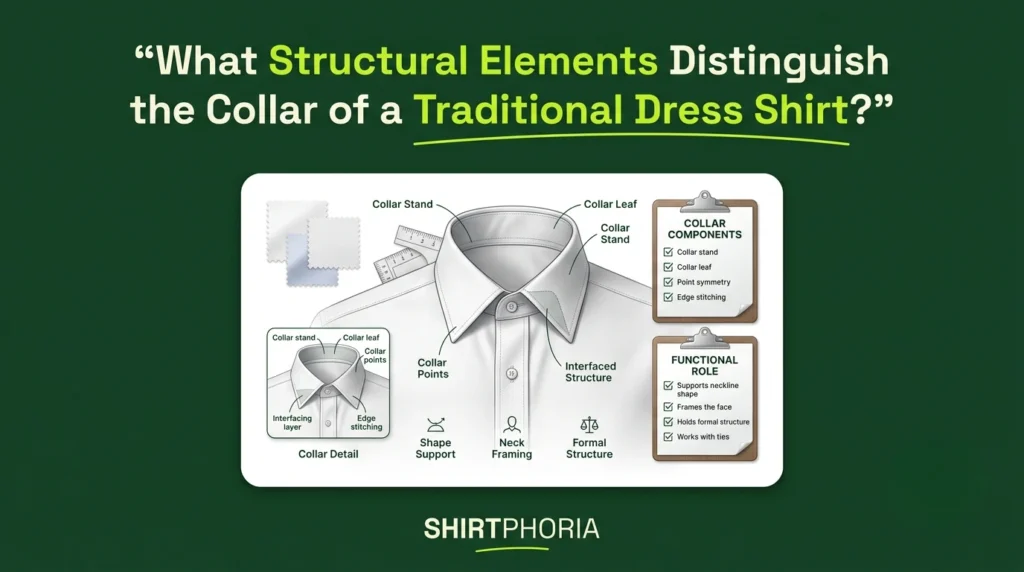
The collar of a traditional dress shirt is defined by visible and hidden structural elements, including the collar leaf, collar band, interlining, tie space, and collar shape.
These dress shirt collar structural elements determine how the collar sits around the neck, frames the face, accommodates a tie knot, and connects visually with a jacket. Many dress shirts lose their intended appearance because the collar collapses, curls, pinches, gaps, or fails to support the chosen tie knot cleanly.
This guide deconstructs dress shirt collar structural elements so readers can understand how collar anatomy, interlining, spread width, collar shape, and tie space influence formality and fit. Each component performs a different role, but collar behavior also depends on fabric, fit, pressing, laundering, construction quality, jacket design, and wearer proportions.
Quick Collar Anatomy Summary
The Collar Leaf: The visible fold-down part of the collar that creates the main style shape.
The Collar Band: The upright strip around the neck that supports the collar leaf and helps the collar sit properly.
The Interlining: The hidden support layer that affects collar stiffness, softness, and structure.
The Tie Space: The gap near the top of the collar that gives the tie knot room to sit cleanly.
The Collar Shape: The visible geometry created by spread width, collar points, and the way the collar frames the face.
Why Are Dress Shirt Collar Structural Elements Essential for Proper Fit?
Dress shirt collar structural elements are essential for proper fit because they control how the collar frames the face, supports the neckline, holds a tie knot, and sits beneath a jacket.
The collar must perform several tasks at the same time. It must fit comfortably around the neck, maintain a controlled shape, provide enough space for the chosen tie knot, and connect cleanly with the jacket collar. A collar that succeeds in one area may still perform poorly in another if its proportions, fabric, or construction do not suit the wearer.
Collar structure does not determine fit or formality by itself. Neck size, shirt fabric, jacket collar, tie-knot size, pressing, laundering, and construction consistency can all change how the collar behaves during wear.
How Collar Structural Elements Frame the Face
Collar structural elements frame the face by creating lines around the jaw, neck, tie knot, and shirt opening.
The shape of the collar affects the visual relationship between the wearer’s face, neck, tie, and jacket. Collar points may create a more vertical or open frame, while the collar band controls how high and clearly the collar sits around the neckline. A detailed overview of these differences appears in the shirt collar styles guide.
A point collar usually creates a narrower, more vertical collar frame. Its downward-facing points can guide the eye toward the tie knot and shirt opening.
A spread collar usually creates a wider, more open frame. The greater distance between the points exposes more of the tie knot and creates a broader visual opening beneath the face.
A button-down collar usually creates a softer, more relaxed collar expression. Its points are secured to the shirt, which can produce a controlled roll rather than the sharper appearance associated with many structured dress collars.
Collar geometry can visually influence proportions, but the effect depends on the wearer’s face, neck, jacket, tie knot, and personal style. A collar should therefore be evaluated as part of the full outfit rather than used as a rigid method for correcting facial or anatomical features.
How Collar Structure Affects Collar Stability
Collar structure affects collar stability because the visible collar shape and hidden support layer help the collar resist collapsing, curling, or folding unevenly.
The collar band provides support around the neck, while interlining helps the collar leaf retain its intended shape. Fabric weight, pressing, stitching consistency, and collar construction also affect how the collar behaves beneath a jacket or around a tie knot.
A well-supported collar may remain neater through normal wear, but laundering, pressing, fabric quality, and construction consistency also affect long-term appearance. Interlining alone cannot guarantee that the collar will stay crisp or retain its shape indefinitely.
A weak collar can collapse under a jacket, while an overly stiff collar can feel harsh, sit unnaturally, or look out of balance with relaxed clothing. The correct level of support depends on the shirt’s purpose, fabric, fit, and styling context.
How Do the Collar Leaf and Collar Band Define Traditional Dress Shirt Collar Construction?
Traditional dress shirt collar construction begins with two visible components: the collar leaf and the collar band.
These elements work together but perform different functions. The collar leaf creates the visible style shape, while the collar band anchors that shape around the neck. Their proportions must support comfort, neckwear, and the intended visual character of the shirt.
What Is the Role of the Collar Leaf?
The collar leaf is the visible fold-down section of the collar, and its cut affects the visible shape and style impression of the shirt.
It is the part most observers notice first because it surrounds the tie knot or open neckline and occupies a prominent position inside the jacket V-zone. Its point shape, spread, length, roll, and stiffness help identify whether the collar appears narrow, open, crisp, soft, traditional, or relaxed.
The collar leaf influences style identity, but it does not determine formality alone. Fabric, interlining, tie use, jacket design, button treatment, and occasion also contribute to the final impression.
A collar leaf that curls, floats away from the shirt, or leaves too much open space around the tie can make the shirt look less controlled. During evaluation, the wearer should check whether both sides sit evenly and maintain a balanced relationship with the tie knot and jacket lapels.
Why Is the Collar Band Necessary?
The collar band, also called the collar stand, is the upright strip that wraps around the neck and supports the collar leaf.
The band gives the collar vertical support and prevents the entire collar from lying flat against the collarbone. It also creates the base from which the collar leaf folds outward and downward.
Because the band sits directly against the neck, it strongly affects comfort. A band that is too tight may pinch or restrict movement, while excessive looseness may create a visible gap around the neck.
A stronger band can create a clearer collar presence, while a softer or lower-feeling band can work better when comfort and relaxed wear matter. The appropriate feel depends on the wearer’s neck, shirt fabric, jacket, and intended use.
The band should sit smoothly without digging into the skin, twisting, or creating uneven pressure. It should also meet the jacket collar cleanly rather than collapsing beneath it or standing awkwardly away from the neck.
How Does Interlining Support Dress Shirt Collar Structural Elements?
Interlining supports dress shirt collar structural elements by helping the collar hold shape and control stiffness, softness, and flexibility.
The interlining sits inside the collar and is not normally visible during wear. Its weight, attachment method, and compatibility with the outer fabric influence how the collar folds, rolls, presses, and responds to movement.
Interlining should be treated as one part of the collar system rather than a guarantee of quality. Fabric, fit, pressing, laundering, stitching, and construction consistency can strengthen or weaken its practical performance.
Fused and Sewn Interlining
Interlining is the inner support layer placed between the outer collar fabrics. In a fused collar, heat and adhesive bond the interlining to the outer fabric. In a sewn or non-fused collar, the support layer is sewn between the fabric layers rather than being bonded across its surface. The fused and sewn collar guide provides further context.
A fused collar often feels firmer and crisper because the support layer is bonded to the outer fabric. This structure can support a clean, pressed appearance, but it may feel too rigid when the interlining, fabric, or neck fit is excessively stiff.
A sewn or non-fused collar often feels softer and more flexible because the internal support layer can move more independently between the outer fabrics. This construction can encourage a softer collar roll, although insufficient support may allow the collar to collapse when stronger neckwear control is needed.
Neither method is automatically superior. The right choice depends on the shirt’s fabric, intended formality, comfort requirements, tie use, collar shape, and desired movement.
| Feature | Fused Collar | Sewn / Non-Fused Collar |
|---|---|---|
| Construction | Interlining is bonded to the outer fabric through heat and adhesive. | Interlining is sewn between fabric layers rather than bonded. |
| Typical Feel | Often firmer and crisper. | Often softer and more flexible. |
| Practical Strength | Can support a clean, pressed collar appearance. | Can support a softer roll and more relaxed feel. |
| Risk If Misused | Can feel too rigid if the interlining, fabric, or fit is too stiff. | Can collapse or look too soft when stronger neckwear support is required. |
| Best Evaluation Method | Check whether it feels crisp without becoming board-like. | Check whether it rolls naturally without collapsing. |
How Do Spread Width and Tie Space Define Dress Shirt Collar Variations?
Spread width and tie space define dress shirt collar variations by controlling how open, narrow, conservative, or expressive the collar appears.
These geometric features shape the space surrounding the tie knot and lower face. They also influence whether the collar feels visually balanced with the wearer’s jacket lapels, neck, and preferred knot.
No spread or tie-space arrangement works for every person. Collar geometry must be assessed alongside point shape, collar stiffness, tie width, knot size, jacket opening, and wearer proportions.
The Geometry of Spread Width and Face Framing
Spread width describes how open or narrow the collar appears around the tie knot and lower face.
A point collar usually creates a narrower, more vertical frame. Its points sit closer together and may work well when the wearer prefers a restrained collar opening or a smaller tie knot.
A spread collar usually creates a wider, more open frame. It exposes more of the tie knot and can create a stronger visual relationship with wider jacket lapels or more substantial knots.
A semi-spread or moderate spread can work as a middle option when the wearer wants room for a tie knot without an extreme cutaway appearance. It may also suit wardrobes that move between business, ceremonial, and less rigid dress settings.
Spread width can influence formality, but the final impression also depends on tie knot, jacket lapel, fabric, collar stiffness, and occasion. A wide spread made from soft fabric may appear less controlled than a moderately spread collar with firmer support.
The Role of Tie Space
Tie space affects how the collar interacts with the tie knot and shirt opening.
Tie space is the gap near the top of the collar where the tie knot sits. This space must accommodate the knot without making the collar leaves bow outward, separate unevenly, or press tightly against the knot.
Tie space should match the wearer’s chosen knot closely enough to prevent crowding, gaping, or outward bowing of the collar leaves. A small knot may sit cleanly in a narrower opening, while a larger knot may need more room.
The wearer should button the collar and test the actual tie knot rather than judging the space from an unbuttoned shirt. The collar should frame the knot neatly while maintaining even contact on both sides.
How Do Dress Shirt Collar Structural Elements Shift Across Style Contexts?
Dress shirt collar structural elements shift across style contexts because formal, traditional, and casual shirts require different levels of structure, softness, tie support, and visual control.
A shirt intended for regular tie-and-jacket wear may use a different collar balance from one intended for open-neck use. The distinction comes from the combined effect of interlining, collar shape, band feel, tie space, fabric, and construction.
These categories describe common tendencies rather than fixed rules. Individual shirtmakers may produce soft spread collars, structured point collars, or button-down collars designed for tailored styling.
| Structural Element | Formal / Spread-Collar Context | Traditional / Point-Collar Context | Casual / Button-Down Context |
|---|---|---|---|
| Interlining | Often firmer to support a cleaner tie-and-jacket presentation. | Often moderate to balance structure and comfort. | Often softer for relaxed collar roll and open-neck wear. |
| Collar Shape | Often wider or more open when the tie knot and jacket support it. | Often narrower and more vertical. | Often softer, more relaxed, and less tie-focused. |
| Collar Band Feel | May feel more structured when designed for neckwear. | Usually balances support and comfort. | Often softer or easier around the neck. |
| Tie Space | Usually needs enough room for a clean tie knot. | Usually works with smaller or moderate knots. | Often less tie-focused unless worn with tailored casual styling. |
In a spread-collar context, the wearer should check whether the collar opening, knot size, and jacket lapels form a coherent visual arrangement. A wide spread can appear incomplete when the tie knot is too small or when the jacket opening leaves the collar unsupported.
In a traditional point-collar context, the collar commonly provides a narrower frame around the knot. The wearer should check whether the points remain controlled beneath the jacket lapels and whether the tie knot fits without crowding.
In a casual button-down context, softer structure and collar roll may be more appropriate than a sharply pressed edge. The wearer should still check for excessive collapse, twisting, or uneven point placement.
How Should You Evaluate Dress Shirt Collar Structural Elements Before Purchase?
Evaluating dress shirt collar structural elements before purchase requires checking collar shape, interlining feel, tie-space behavior, and comfort around the neck.
A collar should be tested in the way it will actually be worn. A shirt intended for tie use should be buttoned and tested with the wearer’s preferred knot. A shirt intended for open-neck wear should be checked for natural roll, controlled spread, and balanced positioning around the neck.
The 4-Point Collar Quality Check
Use the checklist below while trying on or inspecting a dress shirt. Your selections are saved automatically on the same browser.
Place a jacket over the shirt when possible. Check whether the collar stays visible, sits beneath the jacket collar, and avoids collapsing or separating unevenly from the neck.
Reject collars that pinch the neck, collapse under a jacket, curl at the edges, leave a large tie gap, feel cardboard-stiff, or look too soft for the intended occasion.