How to Use the Shirt Skin-Contact Comfort Filter to Choose Better Shirt Fabrics
The Shirt Skin-Contact Comfort Filter is a five-phase wardrobe diagnostic that turns subjective shirt fabric discomfort into repeatable sourcing rules, helping you choose shirts that feel comfortable against your skin throughout the day. Buying shirts based only on appearance often creates a closet full of garments that look good but feel scratchy, stiff, clingy, hot, or distracting during real wear.
The K5 Diagnostic Protocol provides a structured solution to this problem. It works by establishing a comfort baseline, choosing a tactile profile, conducting a closet audit, making a keep, alter, or remove decision, and completing a 12-hour sensory validation. By executing these phases, you shift away from vague aesthetic guessing and establish a practical system for selecting fabrics based on repeatable observations.
Medical Disclaimer
This article is a practical wardrobe diagnostic, not medical advice. It may help you identify textile, finish, fit, seam, or label triggers that cause physical distraction. It does not diagnose skin disease, allergies, nerve responses, or chemical sensitivity. If you experience persistent rash, pain, burning, swelling, severe itching, broken skin, or suspect allergic contact dermatitis, you must consult a qualified medical professional. Reactions to textiles may involve finishing resins, dyes, glues, additives, or other processing substances, as outlined by DermNet.
Download the Template Guide
Get the companion PDF blueprint to define your comfort baseline, track your 12-Hour Sensory Log, and calculate your final sourcing rules offline.
Why Do Shirt Fabrics Cause Skin-Contact Discomfort?
Shirt fabrics cause skin-contact discomfort when fabric finish, weave texture, fit pressure, seams, labels, heat, or cling create repeated distraction during wear. To properly use the filter, you must first recognize how these individual variables interact with your body throughout a typical day.
How Fabric Finish Affects Skin Comfort
Fabric finishes alter the way a shirt feels against the skin by changing surface smoothness, stiffness, softness, and perceived breathability. Treatments such as washing, brushing, peaching, mercerizing, resin finishing, and Heavy Sizing change the handfeel of a shirt. Wrinkle-resistant or easy-care Shirt Fabric Finishes can make fabrics feel smoother or crisper, though they may feel stiff or less breathable under certain wear conditions because they alter how moisture and air pass through the garment. To ensure consumer safety, textile products can be tested for harmful substances, an assurance provided by certifications like OEKO-TEX STANDARD 100. If you suspect an allergic reaction to a fabric finish, discontinue wear and seek professional medical evaluation.
How Weave Texture Changes Neck, Cuff, and Torso Contact
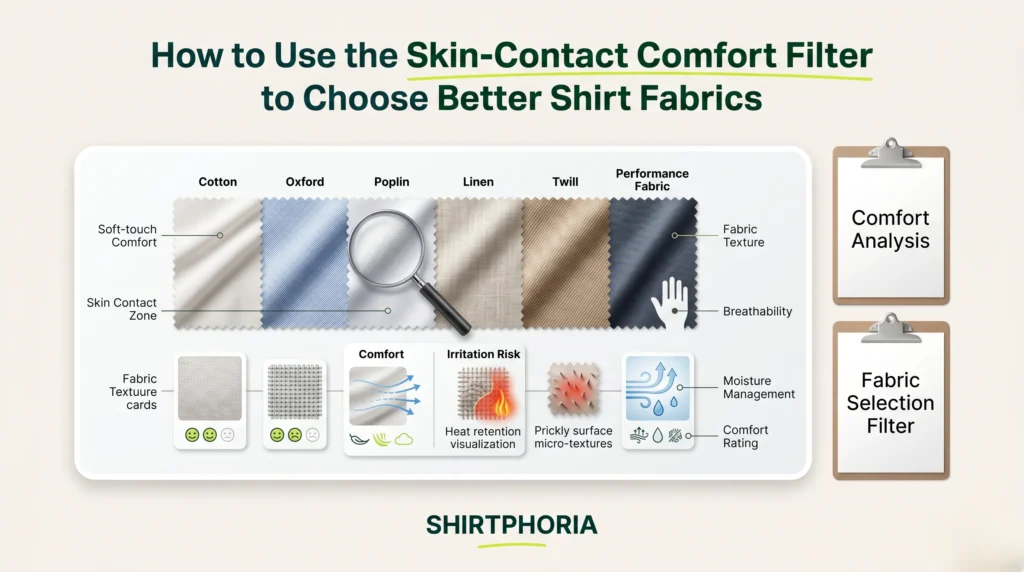
Weave texture changes shirt comfort because the surface structure that touches the neck, cuffs, and torso can feel smooth, crisp, dry, rough, fuzzy, or abrasive depending on yarn and weave behavior. Poplin and Broadcloth often feel smoother because they possess a flatter, tighter surface that minimizes friction against the skin. Conversely, Oxford, linen, and slubby fabrics may offer a more textured, breathable experience, but can feel rougher at high-contact zones due to their uneven surface geometry. Fabric surface friction and roughness can be measured in laboratory settings, such as through the Kawabata Evaluation System (KES-F), but your daily comfort relies on practical, personal testing over hours of wear.
How Fit, Seams, Labels, and Sweat Can Mimic Fabric Discomfort
Fit, seams, labels, and sweat can mimic fabric discomfort because they create pressure, rubbing, heat, or localized scratching even when the main fabric is not the true problem. A tight collar, rough care label, stiff interlining, hard seam edge, or tight cuff forces adjustment and feels like a fabric failure. Consider these common structural mimics:
- Collar Pressure: A tight collar makes a soft fabric feel scratchy because it presses the textile harder against the neck.
- Seam Friction: Bulky interior seams generate localized rubbing across the shoulders or underarms.
- Label Irritation: Stiff tags placed at the back of the neck often cause scratching that is mistakenly blamed on the shirt’s material.
- Moisture Trapping: Heat and sweat trap moisture, which increases your physical awareness of cling and rubbing during long wear.
What Does the Shirt Skin-Contact Comfort Filter Measure?
The Shirt Skin-Contact Comfort Filter measures the difference between required fabric sensations, forbidden fabric sensations, and visual preferences that do not guarantee physical comfort.
How to Measure Required Skin Feel
The filter begins by defining the minimum acceptable skin-contact feel, such as smooth, airy, dry, soft, crisp, or broken-in. You must define these required sensations in plain language before shopping to avoid returning to aesthetic-only purchasing. While laboratory systems test friction, your personal filter relies entirely on repeated wear observations and practical tactile preferences. If a shirt lacks your required sensation, it is an immediate rejection.
How to Identify Forbidden Fabric Sensations
The filter requires identifying forbidden sensations, such as plasticky, clammy, scratchy, stiff, fuzzy, prickly, or clingy. If a fabric repeatedly creates a forbidden sensation during normal wear, it fails the filter for that wearer. Consider the practical definitions of these common forbidden feelings:
- Clammy: The shirt feels damp, warm, or trapped against the skin.
- Scratchy: The surface, seam, cuff, collar, or label repeatedly irritates the skin during movement.
- Stiff: The shirt resists movement, feels rigid, or forms hard creases at high-contact areas.
How to Separate Fabric Preference From Style Preference
The filter separates fabric preference from style preference because a shirt can look excellent while still failing the body during real wear. Color, pattern, brand, and silhouette offer visual wins, but a shirt fails if it creates repeated end-of-day distraction. A shirt that looks right but feels wrong is not a successful daily shirt. Your physical baseline must always veto visual aesthetics.
How to Define Your Shirt Skin-Contact Comfort Baseline (Phase 1)
Phase 1 of the Shirt Skin-Contact Comfort Filter requires defining a personal comfort baseline that turns vague fabric preferences into one clear sourcing rule.
How to Write Your Absolute Skin-Contact Baseline
Writing an absolute skin-contact baseline forces you to define exactly how a shirt must feel to remain wearable throughout the day. For example: “My shirts must feel smooth at the collar, breathable across the torso, and comfortable without requiring an undershirt.” This baseline establishes the mandatory criteria that guide all future purchases.
How to Identify Your Main Discomfort Zones
Identifying your main discomfort zones helps you target the exact places where a fabric, finish, seam, label, or fit issue is most likely to fail. The most common failure points include the collar band, back neck, cuffs, underarms, side seams, torso, and chest.
How to Spot Low-Grade Fabric Distraction During Wear
Low-grade fabric distraction often appears as repeated small actions, such as pulling the collar, adjusting cuffs, lifting the shirt away from the torso, or wanting to remove the shirt early. These physical behaviors indicate wear distraction, allowing you to detect discomfort and reject the garment before it becomes an obvious burden.
| Baseline Field | Reader Input Example |
|---|---|
| Required feel | Smooth, breathable, low-friction |
| Forbidden feel | Scratchy, stiff, clingy, plasticky |
| Main discomfort zone | Neck and cuffs |
| Must-pass rule | No repeated adjusting after 2 hours |
| Ideal daily feel | Comfortable enough to forget the shirt is touching the skin |
How to Choose Your Target Tactile Profile (Phase 2)
Phase 2 requires choosing your target Tactile Profile by matching your comfort baseline to one of three sensory categories: Ultra-Soft, Crisp & Smooth, or Dry & Textured.
Ultra-Soft
Crisp & Smooth
Dry & Textured
How to Choose an Ultra-Soft Tactile Profile
The Ultra-Soft tactile profile prioritizes plush, broken-in softness, making it suitable for readers who value low surface harshness over crisp structure. Fabrics like Peached Twill, brushed cotton, washed cotton, and soft flannel fit this category. The paired risk of this profile is that very soft or fuzzy surfaces may trap heat, feel warmer, or appear less crisp for formal styling.
How to Choose a Crisp & Smooth Tactile Profile
The Crisp & Smooth tactile profile relies on smoother woven fabrics such as poplin or broadcloth to deliver a clean, sleek feel against the skin. This profile suits readers who dislike fuzzy surfaces but still want low scratchiness. Some crisp shirts, such as Mercerized Cotton or heavily treated garments, may feel too stiff if the finish is applied too heavily.
How to Choose a Dry & Textured Tactile Profile
The Dry & Textured tactile profile prioritizes airier, more tactile fabrics such as Oxford cloth, linen, or Open-Weave Cotton. This profile suits readers who prioritize natural airflow and a highly breathable handfeel. The paired risk is that increased weave texture can feel rough or scratchy at the neck, cuffs, or seams for some wearers.
| Tactile Profile | Sensory Experience | Common Fabric/Weave Examples | Best For | Risk to Watch |
|---|---|---|---|---|
| Ultra-Soft | Plush, broken-in, cozy | Peached twill, brushed cotton, washed cotton | Softness seekers | Heat buildup or fuzzy feel |
| Crisp & Smooth | Clean, sleek, structured | Poplin, broadcloth, mercerized cotton | Smooth collar/cuff comfort | Stiffness if heavily finished |
| Dry & Textured | Natural, airy, tactile | Oxford, linen, open-weave cotton | Breathability seekers | Scratchiness or rough seams |
How to Turn Fabric Preferences Into Required and Forbidden Sourcing Rules
Turning fabric preferences into required and forbidden sourcing rules removes guesswork from shopping by converting comfort needs into clear buying constraints.
How to Define Required Fabric Finishes
To define required fabric finishes, name the textile qualities that support your tactile profile, such as washed cotton, soft poplin, brushed cotton, or breathable open weave. Your required finishes should be drawn directly from garments that have already passed your personal comfort baseline.
How to Define Forbidden Fabric Finishes
Defining forbidden fabric finishes requires blacklisting treatments or fabric signals that repeatedly violate your baseline, such as heavy sizing, scratchy synthetics, rigid collars, or clingy dense blends. If wrinkle-resistant or heavily finished shirts repeatedly cause discomfort for you, add them to your forbidden-finish list unless a tested garment proves otherwise. Suspected allergic reactions to textile dyes, resins, or additives require professional medical evaluation.
How to Build a Non-Negotiable Shirt Buying Rule
Building a non-negotiable buying rule means setting a clear behavior boundary, such as refusing stiff collars or scratchy cuffs even when the color, brand, or discount is attractive. The rule must be easy to apply in a store or on a product page. For example: “I do not buy shirts that feel stiff at the collar,” or “I only buy poplin if the collar feels smooth after movement.”
| Comfort Goal | Required Finish / Fabric Signal | Forbidden Finish / Fabric Signal |
|---|---|---|
| Softer neck contact | Washed cotton, brushed cotton | Stiff collar finish, rough linen |
| Lower cuff friction | Smooth weave, soft cuff structure | Scratchy texture, rigid construction |
| Less cling | Breathable cotton, open weave | Dense synthetic blend, clammy finish |
| Cleaner smooth feel | Poplin, broadcloth, mercerized cotton | Fuzzy surface if the wearer dislikes fuzz |
| More natural airflow | Oxford, linen blend, open-weave cotton | Plastic-like coating, heat-trapping finish |
How to Audit Your Closet for Discomfort Triggers (Phase 3)
Phase 3 involves physically auditing your current closet to identify the garments that trigger discomfort and isolate the fabric, fit, finish, seam, or label flaw responsible.
How to Identify the Shirt That Triggers Skin-Contact Discomfort
Identify the trigger shirt by selecting a garment you instinctively avoid wearing because it repeatedly causes collar friction, torso heat, cuff rubbing, cling, or end-of-day distraction. Avoided garments, early removal, reluctant re-wearing, and constant adjusting are practical indicators that a shirt fails your comfort filter.
How to Isolate the Fabric, Finish, or Construction Trigger
Isolate the exact trigger by inspecting whether the discomfort comes from fabric texture, surface finish, seam construction, collar stiffness, cuff pressure, label placement, or heat buildup. Inspect the garment physically inside and out. Compare the trigger shirt against a shirt that easily passes your comfort baseline to spot structural or textile differences.
How to Separate Fabric Friction From Fit or Construction Problems
Because a tight collar, rough label, stiff seam, or poor ventilation can mimic fabric friction, you must test fit and construction before blaming the textile itself. A tight collar makes a smooth fabric feel abrasive. A rough care label makes the back of the neck feel itchy. A stiff seam generates localized rubbing even when the main fabric is soft.
| Discomfort Signal | Possible Cause | Sourcing Rule |
|---|---|---|
| Neck scratching | Stiff collar finish, rough weave, or label | Avoid rigid collar finishes and scratchy neck-contact textures |
| Cuff rubbing | Coarse fabric or tight cuff | Choose smoother cuff fabric and better cuff fit |
| Heat and cling | Dense weave, synthetic blend, or poor ventilation | Choose breathable cotton or open-weave options |
| Torso scratchiness | Rough texture or slubby surface | Avoid coarse textures for direct contact |
| End-of-day distraction | Wrong tactile profile | Switch to the tactile profile that passes the 12-hour log |
| Constant adjusting | Fit pressure, seam friction, or label irritation | Test fit, construction, and fabric separately |
How to Remove or Retire Garments That Fail the Comfort Filter (Phase 4)
Phase 4 requires deciding whether each failing garment should stay, be altered, be restricted to short-wear use, be donated, or be removed from your active wardrobe.
How to Decide Whether a Shirt Should Stay, Be Altered, or Be Removed
Not every failing shirt must be discarded; some comfort problems can be fixed by removing a scratchy label, adjusting fit, washing according to the care label, or reserving the shirt for shorter wear windows. Alter the garment if the trigger is fixable. Restrict the shirt if it remains tolerable only for brief events. Donate or remove the shirt if it repeatedly fails your baseline and forces distraction.
How to Make a Verb-Based Purge Commitment
A successful wardrobe audit requires verb-based commitments such as keep, wash, alter, remove label, donate, repurpose, or discard. Use clear logic: “I will remove the rough label,” “I will keep this shirt only for short events,” or “I will donate the heavy linen shirt.”
How to Prevent Aesthetic Buying From Overriding Comfort Rules
You must prevent aesthetic buying from overriding comfort rules because a visually perfect shirt still fails if it repeatedly violates your skin-contact baseline. Hanger appeal is deceptive; some shirts look crisp and impressive before wear but feel stiff, hot, or distracting once the body begins moving.
How to Validate Your Fabric Rules With a 12-Hour Sensory Log (Phase 5)
Phase 5 validates your sourcing rules by using a 12-Hour Sensory Log to test whether a shirt maintains comfort across a full day of wear, heat, movement, and repeated contact.
How to Run a Full-Day Wear Test
A valid wear test documents the shirt’s physical feel at clear intervals: initial put-on, two hours, six hours, and the end of the day. Some shirts feel entirely acceptable during a short try-on, but become heavily distracting after movement, body heat, and extended skin contact activate the fabric’s flaws.
How to Score Neck, Cuff, Torso, and Cling Discomfort
Because a fabric can behave differently across the body, the log separately scores neck discomfort, cuff discomfort, torso comfort, and cling level on a personal 1–10 scale. This 1–10 scale is a personal tracking system, not a clinical or scientific metric. Apply the same scoring logic to every wear test to ensure consistency.
How to Write an End-of-Day Verdict
The end-of-day verdict turns the sensory log into a decision: confirmed, adjusted, restricted to short wear, or rejected. Determine if the fabric is confirmed (buy similar fabric again), adjusted (search for a softer or smoother variant next time), short-wear only (keep for limited use), or rejected (do not buy this profile again).
| Date | Shirt / Fabric | Finish / Weave | Neck Discomfort 1–10 | Cuff Discomfort 1–10 | Torso Comfort 1–10 | Cling Level 1–10 | End-of-Day Verdict |
|---|---|---|---|---|---|---|---|
| [Date] | 120s 2-ply poplin | Crisp & Smooth | 2/10 | 1/10 | 8/10 | 1/10 | Smooth, crisp, no clinging — rule confirmed |
| [Date] | Heavy linen shirt | Dry & Textured | 6/10 | 5/10 | 7/10 | 2/10 | Airy but too rough at neck — avoid for direct skin contact |
Try It: Interactive Sensory Log Calculator
Use this tool at the end of a real wear test. It calculates a diagnostic verdict based on your highest point of friction and saves your last 5 logs locally so you can compare different fabrics over time.
–
Recent Saved Logs
| Shirt & Date | 1-10 Scores | Verdict |
|---|
How Do You Avoid False Results in the Shirt Skin-Contact Comfort Filter?
To maintain the accuracy of your diagnostic rules, you must avoid false results by separating fabric failure from fit issues, construction flaws, labels, undershirts, laundering condition, and unusual weather.
How to Avoid Blaming Fabric When Fit Is the Real Problem
You must avoid blaming the textile when fit is the real problem because a tight collar, tight cuff, or tight torso can make even a smooth fabric feel irritating. Fit pressure intensifies rubbing, tricking you into rejecting a Sourcing Rule Matrix requirement when the fabric itself is adequate.
How to Avoid Blaming Texture When Seams or Labels Are the Real Problem
Rough stitching, rigid interlinings, abrasive care tags, or label placement can trick you into believing the main fabric is uncomfortable. Inspect all high-contact zones inside the garment before definitively blaming the exterior fabric texture.
How to Avoid Judging a Fabric From a Short Try-On
Never judge a fabric from a five-minute try-on because some shirts feel acceptable at first but become distracting after heat, movement, and longer skin contact. Short try-ons entirely miss end-of-day effects and sensory fatigue.
How to Repeat the Wear Test Before Creating a Permanent Rule
If a shirt fails under unusual circumstances, such as extreme heat, unusual humidity, illness, stress, or an unusually active day, repeat the wear test under normal conditions before creating a permanent sourcing rule. Environmental shifts can heavily alter your comfort perception.
| False Result Cause | Why It Misleads the Test | Fix |
|---|---|---|
| Tight collar | Feels like fabric friction | Test a better-fitting collar before blaming fabric |
| Rough label | Creates localized scratching | Remove or cover the label, then retest |
| Hot weather | Increases sweat and cling | Repeat under normal conditions |
| One short try-on | Misses end-of-day distraction | Use the 12-hour sensory log |
| New unwashed shirt | Finish may feel stiffer at first | Wash according to label, then retest |
| Wrong undershirt | Changes skin contact | Test with and without the undershirt |
What Are the Final Takeaways From the Shirt Skin-Contact Comfort Filter?
The final takeaways from the Shirt Skin-Contact Comfort Filter are that shirt comfort can be tracked, aesthetic preferences must not override tactile reality, and repeated wear testing creates better sourcing rules.
How to Turn Comfort Data Into a Shirt Sourcing Rule
The final objective is to turn comfort data into a specific, personalized shirt sourcing rule that guides future shirt purchases. For example: “I choose crisp, smooth cotton broadcloth for daily wear, avoid scratchy linen near the neck, and reject any shirt that scores above a 4/10 discomfort level after a full-day wear test.” The 4/10 threshold is a personal example; adjust your requirements based on your verified logs.
Frequently Asked Questions
Common questions about implementing the Shirt Skin-Contact Comfort Filter and diagnosing wardrobe issues.
Terms Explained
| TERM | DEFINITION |
|---|---|
| Kawabata Evaluation System | A laboratory system used to measure fabric surface friction, roughness, and other tactile properties. Often used to scientifically validate Tactile Profiles before mass production. |
| OEKO-TEX STANDARD 100 | A globally recognized textile certification that tests finished garments for harmful substances and chemical residues to prevent contact dermatitis. |
| Heavy Sizing | A chemical finishing process applied to woven fabrics to create a crisp, wrinkle-resistant surface. It frequently causes excessive Surface Stiffness and traps body heat. |
| Tactile Profile | A sensory categorization of how a fabric physically feels against the skin, most commonly divided into Ultra-Soft, Crisp & Smooth, and Dry & Textured. |
| 12-Hour Sensory Log | The final phase of the comfort filter where a wearer actively tracks heat buildup, skin cling, and physical friction at set intervals across a full day of wear. |
Conclusion
In conclusion, the Shirt Skin-Contact Comfort Filter replaces the guesswork of shirt shopping with a five-phase diagnostic system that prioritizes physical wearability over pure aesthetics. Defining a baseline, choosing a tactile profile, auditing current garments, and executing the 12-hour sensory log builds a wardrobe free of tactile distractions. Remember that this framework serves as a practical wardrobe diagnostic, not a medical tool. The goal is not to find a universally perfect shirt fabric, but to build a wardrobe that respects your personal comfort rules and stays physically unobtrusive throughout your day.